The 14 EightThousanders

Everest

The Mount Everest expedition is a unique mountaineering experience that will allow you to be at the highest point in the world.

Country

Nepal

Peak name

Mt. Everest

Duration

53 days

Route

S-Col; SE- Ridge

Range

1

Coordinates

27°59'18"N 86°55'33"E

Weather reports

Live weather report

Range

Mahalangur Range

Trip summary

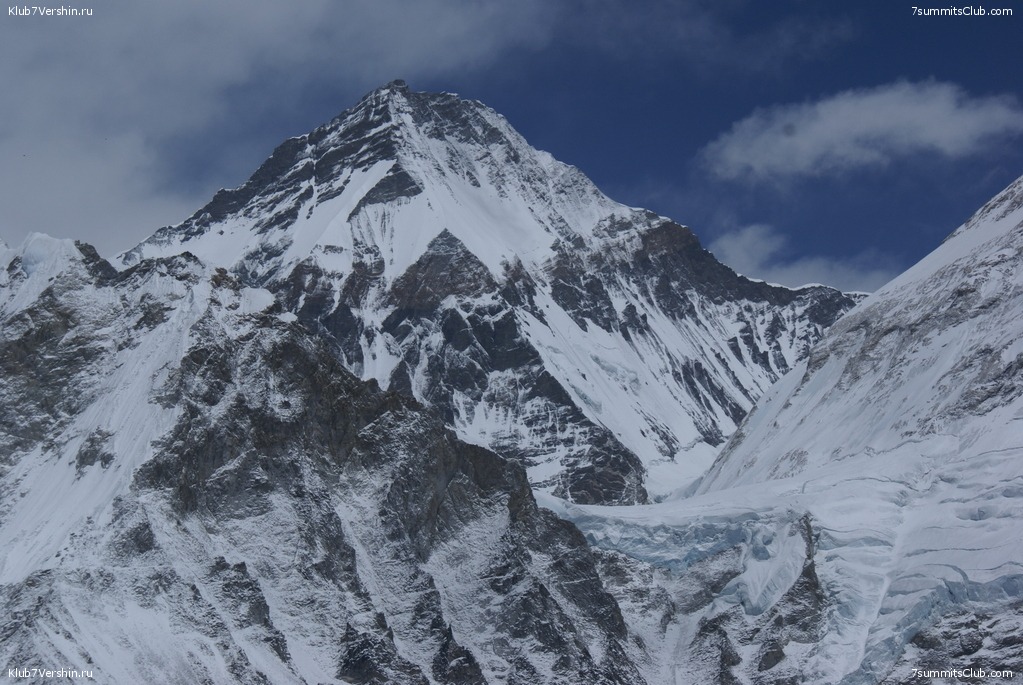
Everest, Ask an adventurer about their dream, and they’ll answer with a single word: EVEREST. Who wouldn’t want to reach the top of the world? Who wouldn’t want to touch the sky? It’s the journey of a lifetime, the Everest Expedition. Mount Everest is the world’s tallest mountain and is located in the Himalayas, on the border between Nepal and China. Mount Everest, also known as Sagarmatha in Nepal and Chomolungma in Tibet (China), is the highest peak on Earth with an altitude of 8,848.86 meters. The southwest face is in Nepal, while the north and east faces are in Tibet. In 1715, China first surveyed the mountain while mapping its territory and depicted it as Mount Qomolangma. The Great Trigonometrical Survey (GTS) initially identified it as Peak XV and officially revealed its altitude as the world’s highest mountain, at 8,888 meters, in 1856. Sir Andrew Waugh renamed Peak XV Mount Everest in 1865 after failing to find a local name for the peak. The mountain was named after Sir George Everest, former superintendent of the GTS and Waugh’s superior. Sir George was a Welsh surveyor who served as Surveyor-General of India for thirteen years, beginning in 1830. Mount Everest has fascinated mountaineers worldwide since the 1920s, when Tibet initiated Everest-climbing expeditions. In 1921, the first reconnaissance expedition to Everest was undertaken. Despite initial difficulties, the expedition eventually found a viable route to the summit, which to this day is considered the standard climbing route from the north face. In 1922, a full team from the British Expedition, led by Charles Bruce, attempted to climb Mount Everest. It was Edward Norton, on his second attempt, along with the rest of the British expedition team, who reached the summit at 8,572 meters. Climbers George Mallory and Andrew Irvine disappeared on the third attempt in 1924. Mallory’s body was found 75 years later, in 1999. Several attempts were made to ascend Everest before the successful attempt by Sir Edmund Hillary and Sherpa Tenzing Norgay on May 29, 1953, via the South Col route (Nepal). Currently, it is reported that around 1,000 ascent attempts are made each year. An expedition to Mount Everest is undoubtedly a once-in-a-lifetime opportunity. However, these expeditions face numerous obstacles, such as high altitude, adverse weather conditions, and avalanches. It is essential to be well-trained before attempting the climb. It is necessary to prepare your body for the 8,848.86 m ascent to the summit of Mount Everest. Depending on your current fitness level, you will need to train for several months before beginning the climb. A climber must develop both cardiovascular and muscular strength; oxygen levels decrease by 60 to 70% compared to sea level. Furthermore, ensure you are prepared to carry large backpacks to the summit, as you will be carrying an oxygen tank and heavy packs. Acclimatization to the weather conditions is essential, and you must be prepared for rockfalls and avalanches. Learning rescue techniques would be an added advantage.

The Seven Summit Trek Everest expedition begins the first week of April from Kathmandu. We will take the South Col route to the summit. You will have a couple of days to prepare your equipment and paperwork. Afterward, you will fly to Lukla, from where the actual trekking to base camp begins, taking approximately seven days on foot, depending on the itinerary. This trip is ideal for those who have already summited several 7,000-meter peaks or higher. We will travel to Camp I (6,065 m), where we will admire the vast expanse of the Khumbu Glacier. The Khumbu Glacier is located about 450 meters away on a gradual slope to Camp II (6,750 m) and about 610 meters away to Camp III (7,300 m). Camp III is situated at the head of the Lhotse face. From this point onward, you will require supplemental oxygen. You will reach Camp IV (7,910 m) just after crossing the 8,000-meter mark. This point is also known as the Death Zone.

Our Airbus Heli Everest will provide constant support to our team by supplying them with fresh fruits, vegetables, meats, and other food items almost daily. It will also be ready to assist you and ensure your safety whenever needed.

“We look forward to serving you and sharing our expertise with you.”

More Information

Everest Base Camp (5400 m / 17,717 ft)
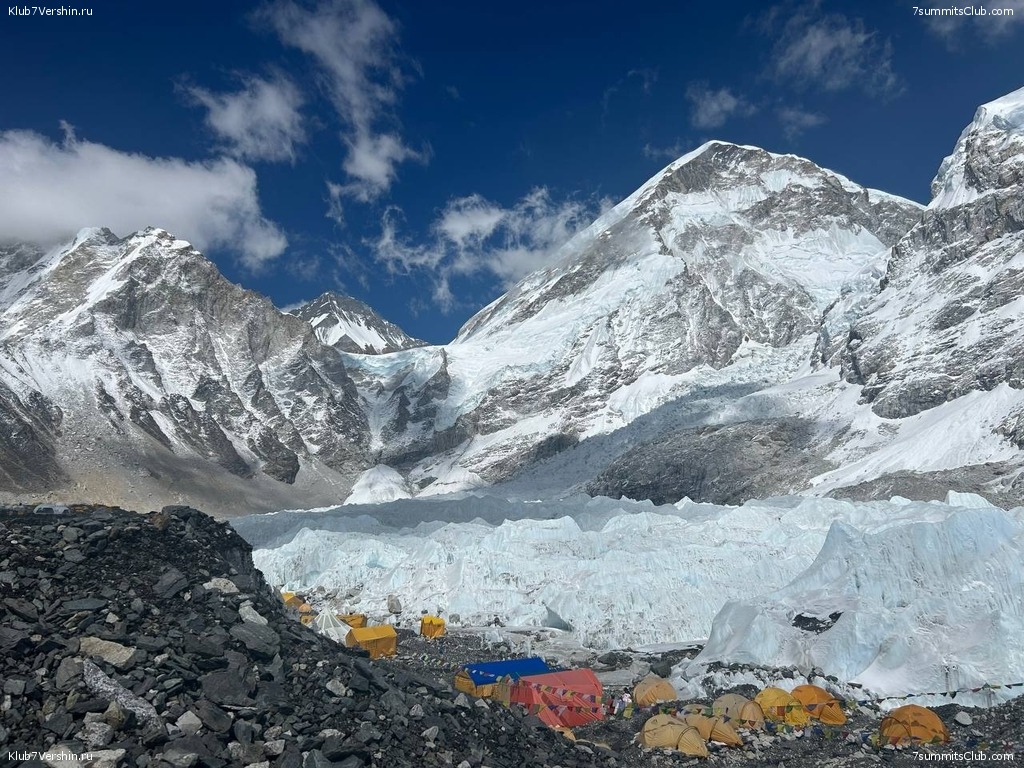
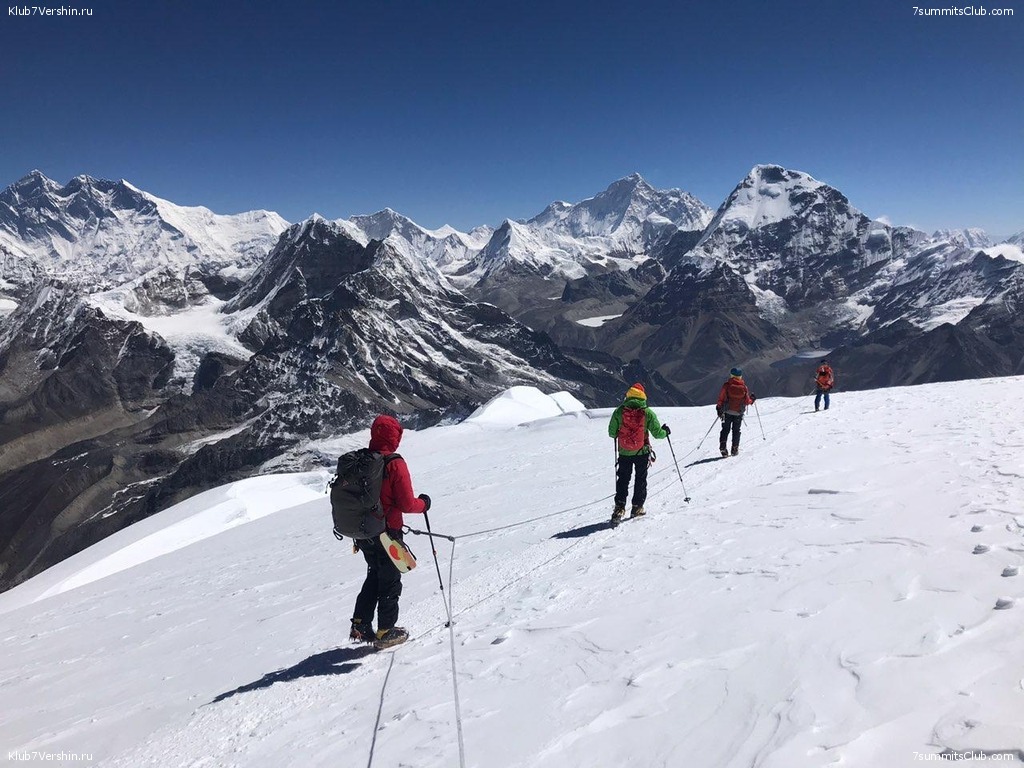
A scenic flight to Lukla begins the trek that will take you to Everest Base Camp (5400 m). The trek to Base Camp offers magnificent views of the Mahalangur range, including the landscapes of Ama Dablam, Pumori, and Nuptse. Finally, you will be welcomed by our top team of Sherpas. At Everest Base Camp, there will be a large number of climbers aiming to summit Everest from their own camps. Among expedition operators, Seven Summit Treks is noted for having the best base camp setup, with a nearby helipad for easy transport of supplies and rescue. Each member will have an individual tent, as well as shared tents with dining, kitchen, showers, communication, and toilet facilities. Before ascending the mountain, we will hold a grand Puja ceremony at Base Camp to appease local deities and pray for good luck and a safe climb. Seven Summit Treks will provide frequent helicopter transfers to EBC, each carrying fresh vegetables, fresh meat, and drinks for our members. The base camp will be a fully equipped facility with a chef, a wide variety of menu options, bakery, café, and an excellent place to socialize with other climbers.
Camp I (6065 m / 19,898 ft)
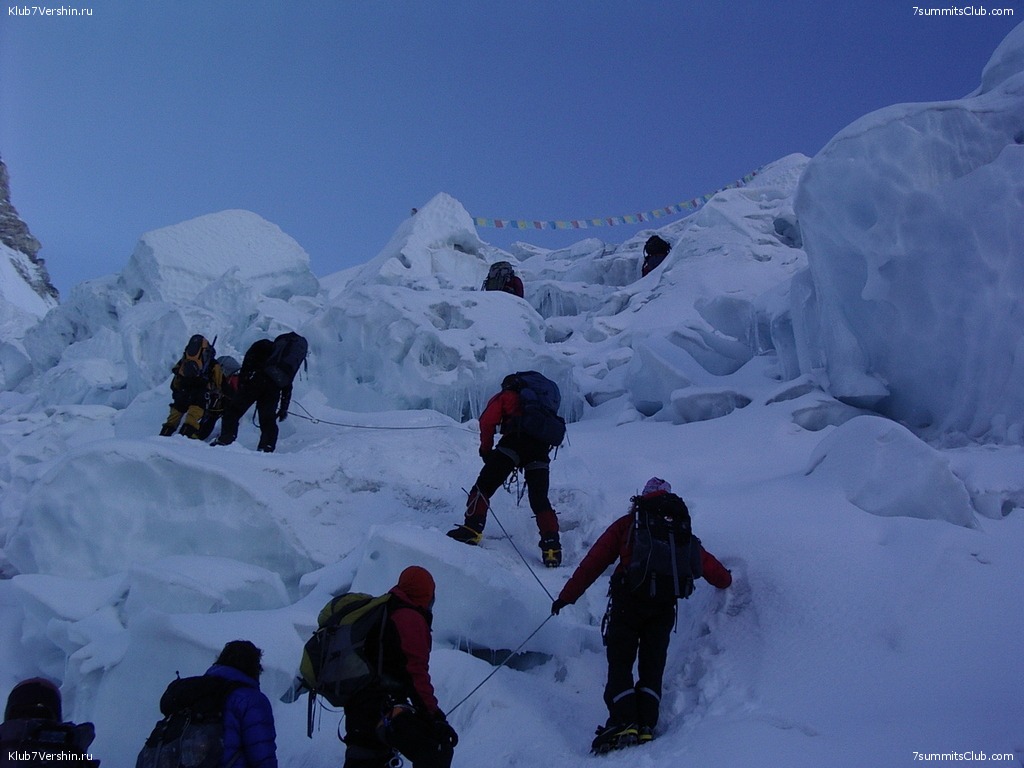
Once you arrive at EBC, your climbing Sherpa or team leader will review basic and advanced Base Camp training. You will cross the Khumbu Icefall, a 600-meter moving ice formation. For better acclimatization, once the Sherpa team has fixed the ropes, you will ascend to Camp I at 6065 m. This section involves mixed terrain with few crevasses and ice on the glacier section. The climb will take approximately 4–5 hours. Frequent rotations between Camp I and Base Camp will be conducted. Camp I is located above the vast Western CWM snowfield. Tents will be set up for 2 people per tent, and a chef will provide hot, fresh meals for climbers.
Camp II (6750 m / 22,146 ft)
Camp II is situated at 6750 m, just below the massive southwest face of Everest. The climb from Camp I to Camp II involves intermediate ice with some mixed climbing sections. Some rock and ice walls will be climbed, and there is a slightly technical section in the middle of the glacier, but fixed ropes are provided. At Camp II, the SST fixed dining tent with a kitchen is located, making this the main place to spend most nights after Base Camp. Tents are shared at a 2:1 ratio (2 people per tent), and an expedition chef ensures fresh meals at this altitude.
Camp III (7300 m / 23,950 ft)
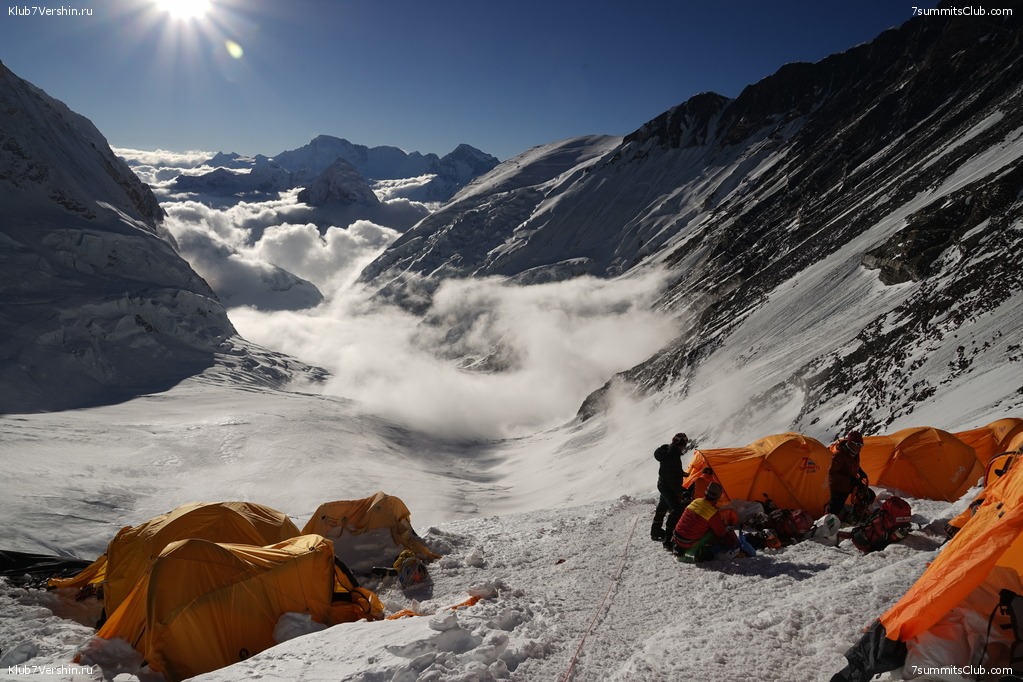
Climbing from Camp II to Camp III involves ascending a landmark called the Lhotse Face, a steep icy slope west of the summit. The ice section is technically challenging, with slopes between 30–45 degrees, but it is safe thanks to fixed ropes. Our veteran Sherpas will guide you up the face to Camp III. You will spend the night at Camp III before heading to Camp IV for the final stretch. Tents at Camp III are shared at the same 2:1 ratio. Due to its location, a fully equipped camp is not possible, so meals will be served by Sherpas to each climber.
Camp IV (7906 m / 25,938 ft)
Camp IV, also known as the South Col, is probably the highest pass in the world. This col connects Everest and Lhotse and is the last camp before the Everest summit. Camp IV is a vast, elongated pass reached after crossing the Geneva Spur above Camp III. There are two rock sections before Camp IV: the Yellow Band, an intermediate layer of marble, phyllite, and semi-schist rock, and the Geneva Spur, an anvil-shaped black rock ridge. Both areas have fixed ropes. In climbing, the South Col also marks the beginning of the Death Zone (an elevation unfavorable for normal metabolic processes). You will visit Camp IV twice: first during acclimatization rotations and again for the summit push. Our Sherpa team will have already transported oxygen bottles and set up camps to ensure proper rest even at this altitude. This elevation is generally unsuitable for normal human metabolic function, so primarily carbohydrates and liquids will be consumed for energy, provided by your climbing Sherpa.
Summit Push (8848.86 m / 29,032 ft)
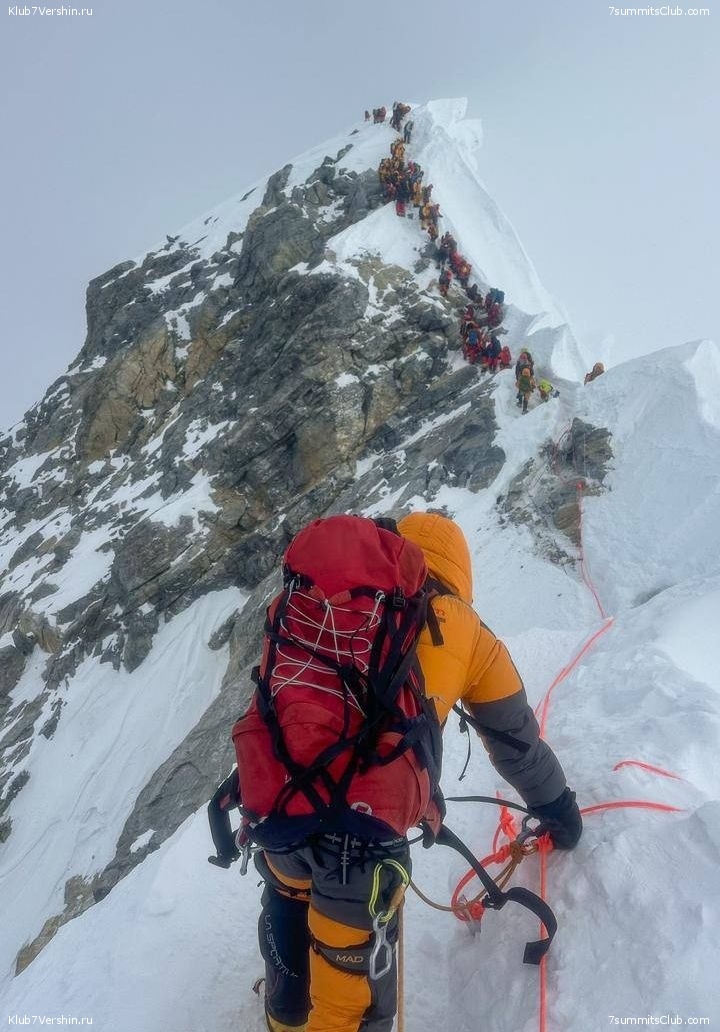
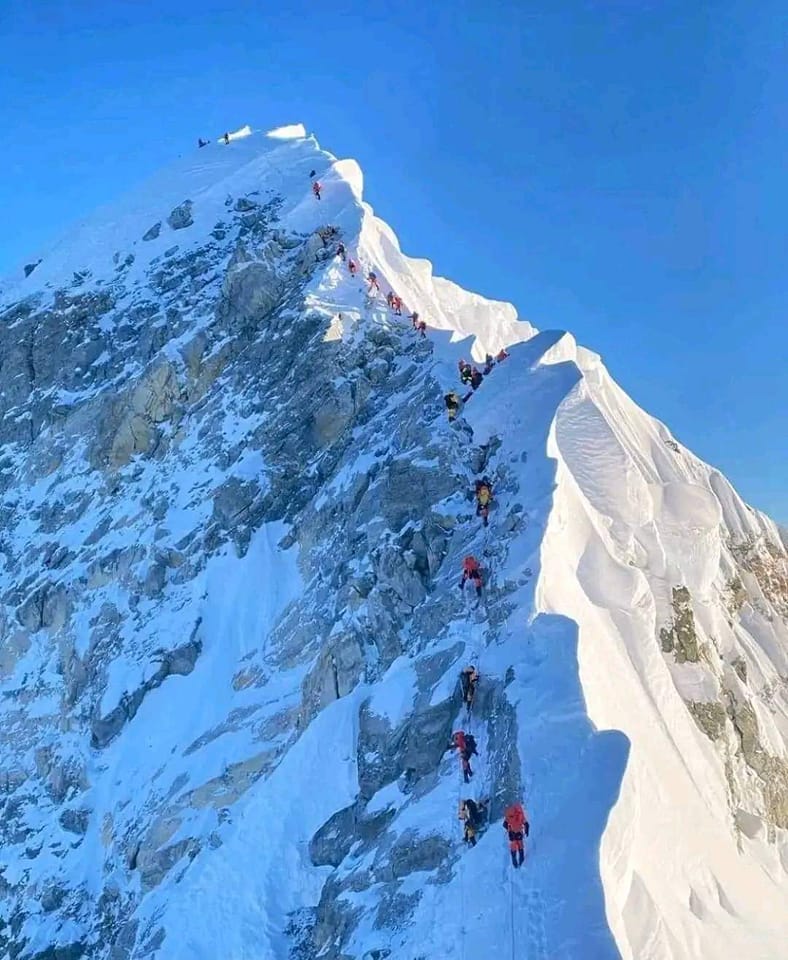
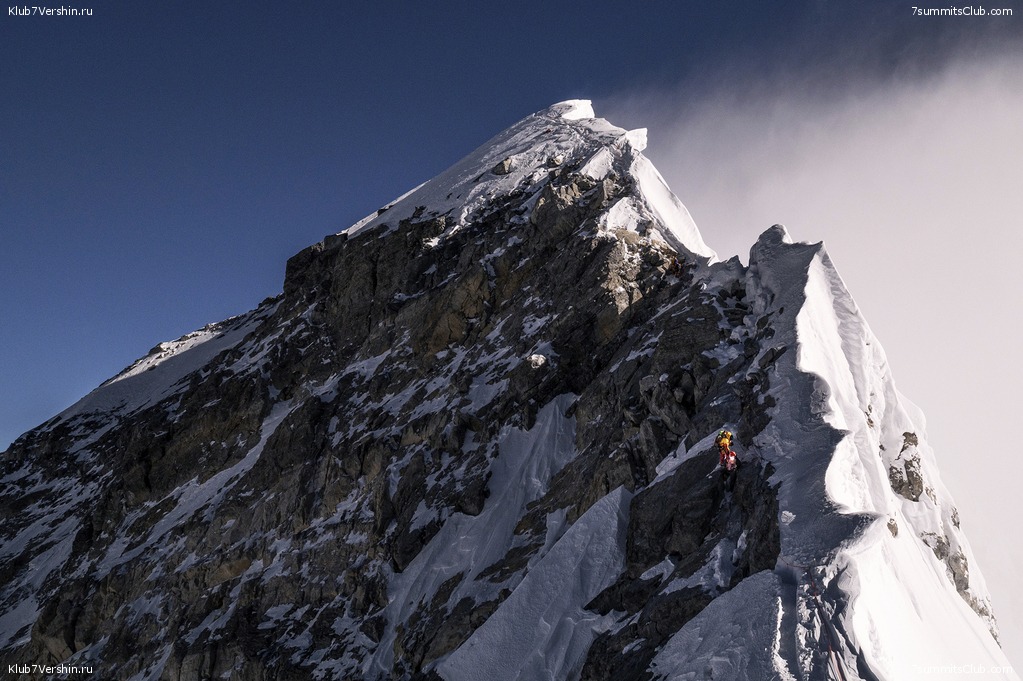
With your veteran climbing Sherpa, you will begin the summit push around midnight. Nights are usually stable for the hard push. It will be a long night, but the joy of seeing the sunrise from the world’s highest point will erase fatigue. You just need to keep going. The route goes along the triangular face above the South Col to the Balcony, the South Summit, and finally the dream summit of Everest. The whole world is now beneath your feet. After taking some photos, you will descend towards…
Maximum elevation:

8,848.86m / 29,032ft

Walking per day:

5-7 hours

Accommodation:

Hotel + Lodge + Tent

Best season:

Spring

Group size:

2 - 15 PEOPLE

Itinerary

Bitácora de expedición

EVEREST 2026

Arrival in Kathmandu and transfer to the hotel by our staff.
Hotel
Rest day in Kathmandu. Expedition briefing and final preparation of technical equipment.
B / L Hotel
Domestic flight to Bhadrapur and continuation by road to Phidim.
B / L / D Lodge
Trek following the Dudh Koshi River and a steep ascent to the Sherpa capital, Namche Bazaar.
B / L / D Lodge
Rest day for acclimatization. Optional short hikes to Everest View Hotel.
B / L / D Lodge
Trekking with panoramic views of Everest, Lhotse, and Ama Dablam to Dibuche.
B / L / D Lodge
Ascending hike through the Imja Valley to reach the settlement of Dingboche.
B / L / D Lodge
Ascent to Thukla Pass and continuation along the Khumbu Glacier moraine to Lobuche.
B / L / D Lodge
Trek alongside the glacier to Gorak Shep and arrival at the iconic Everest Base Camp.
B / L / D Tent
Technical acclimatization period: [Base Camp – Rotations (Camp I, Camp II, and Camp III) – Base Camp].
Full Board High Camps
Climbing period depending on the optimal weather window: [Base Camp – C2 – C3 – C4 – Summit – Return to Base Camp].
Full Board Summit
Dismantling the camp and organizing loads for the return.
B / L / D Tent
Start of the trek down on foot from Base Camp to Pheriche.
B / L / D Lodge
Continuation of the descent through the valley to Namche Bazaar.
B / L / D Lodge
Last day of trekking returning to Lukla.
B / L / D Lodge
Flight from Lukla to Kathmandu and transfer to the hotel.
Breakfast Hotel
Free day for leisure and shopping before the international departure.
Breakfast Hotel

Included

Cost Includes

Accommodation & Welcome

  • Kathmandu: 4 nights in a 4-star hotel (single room with breakfast).
  • Welcome Dinner: Dinner at a standard tourist restaurant with the office team.
  • Luggage Assistance: Customs assistance in Nepal (customs fees may apply).
  • Souvenir: A memento at the end of the trip and a Seven Summit Treks duffle bag.

Permits & Official Fees

  • Climbing Permits: Government royalties and permits for Everest, Sagarmatha National Park, and Pasang Lhamu Municipality.
  • Icefall Fee: Payment to SPCC (Sagarmatha Pollution Control Committee) for using and maintaining the Khumbu Icefall.
  • Liaison Officer: 1 government liaison officer (equipment, salary, and accommodation).
  • Waste Management: Fees for transporting human waste and garbage disposal.
  • Summit Certificate: Issued by MoCTCA after a successful ascent.

Transport & Luggage

  • Transfers: Airport – Hotel – Airport via private vehicle.
  • Domestic Flights: Kathmandu – Lukla (round trip) as per itinerary.
  • Equipment Transport: Transport of equipment Kathmandu – Lukla (air cargo) and to the Base Camp (Porters / Yaks). Return included.
  • Personal Luggage: Up to 70 kg per member during the trek (Porters / Yaks). Excess weight charged extra.

Meals & Base Camp Logistics

  • Trekking: 3 meals per day with tea, coffee, and hot water. Shared accommodation in lodges/tea houses.
  • Base Camp (Full Board): 3 meals per day, soft drinks, and juices. Regular supply of vegetables, meat, and fresh fruits via helicopter.
  • SST Exclusive: Bakery and bar available at Base Camp for team members.
  • Infrastructure: Individual “Box” tent with mattress and pillow. Dining, kitchen, communication, toilet, and shower tents.
  • Power: Solar panels and generator for lighting and device charging. Heaters in common areas.

Mountain Support & Staff

  • High-Altitude Sherpa: 1 licensed veteran Sherpa per member (1:1) during all climbs and rotations.
  • Assistance: Sherpa help for transporting gear to high-altitude camps.
  • Route Fixing: Experienced Sherpa team will fix the route to the summit (no extra cost).
  • Nepali Staff: Head cook and assistants. Includes salaries, transport bonuses, equipment, meals, and emergency insurance.
  • Training & Health: Base Camp training (oxygen, ice walls, ladders) by UIAGM guide and two medical checkups before summit push.

Oxygen & High Altitude

  • Oxygen Bottles: 5 bottles (4L) per member and 3 bottles for high-altitude Sherpa.
  • Oxygen System: 1 mask and regulator set per person (must be returned).
  • High-Altitude Camps: Shared tents (2:1), fuel, pots, and high-altitude food (C1 to C4).
  • High-Altitude Kitchen: SST provides chef and dining tents at Camp I and Camp II.
  • Backup: Spare oxygen and equipment at Base Camp for emergencies (fees may apply).

Communications & Safety

  • Safety: Satellite phone (Sherpa), Walkie-Talkie (Base-Mountain), and required permits.
  • Weather: Regular meteorological reports from Meteotest (Switzerland).
  • Internet: 1 Mbps connection at Base Camp (charges may apply).
  • Medical: Comprehensive medical kit and route map.

Not Included

Cost Excludes

International Flights

Air tickets to and from Kathmandu.

Nepal Visa

Visa fee ($125 USD for 90 days).

Meals in the City

Lunches and dinners in Kathmandu (and in case of early return).

Extra Nights

Additional accommodation in Kathmandu due to itinerary changes or canceled domestic flights.

Travel Insurance

Mandatory: medical coverage, rescue, air evacuation, and repatriation (submit a copy before travel).

Personal Expenses

Phone calls, internet, laundry, hot showers, bottled/mineral water, and alcoholic beverages.

Personal Gear

Technical clothing, personal climbing equipment, personal first-aid kit, and toiletries.

Special Permits

Fees for professional filming, cameras, or drones.

Summit Bonus

Bonus for each climbing Sherpa: Minimum $1,800 USD.

Tips

Minimum contribution: $100 USD (per section) for porters/guides and $300 USD for base and high-altitude staff.

Dates

CONFIRMED DATES 2027
DURATION
STATUS
GROUP
ACTION
12 APR – 03 JUN 2027
53 DAYS
Applications Open
15 PAX Maximum Group

Map

Reviews

Leave a Reply

Your email address will not be published. Required fields are marked *