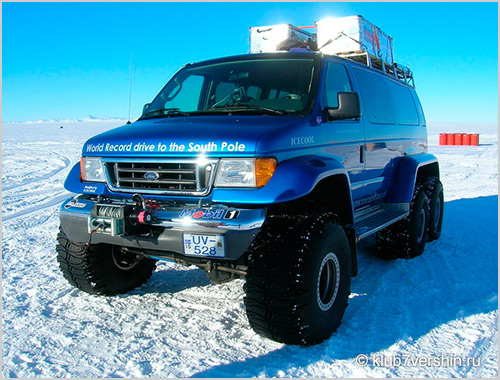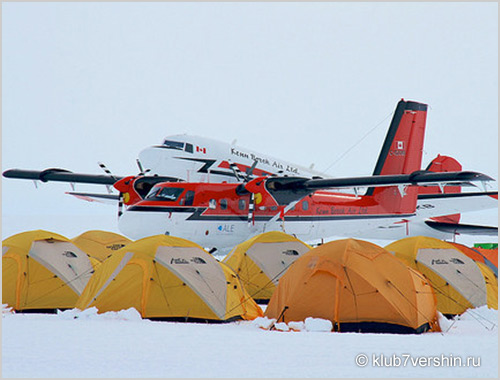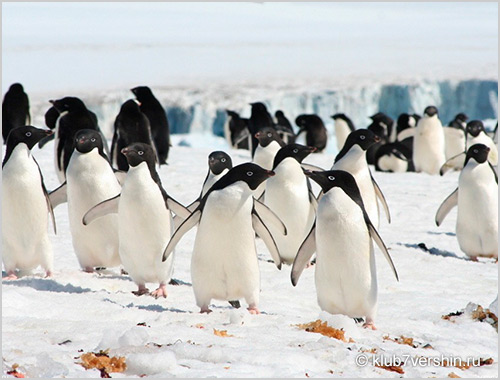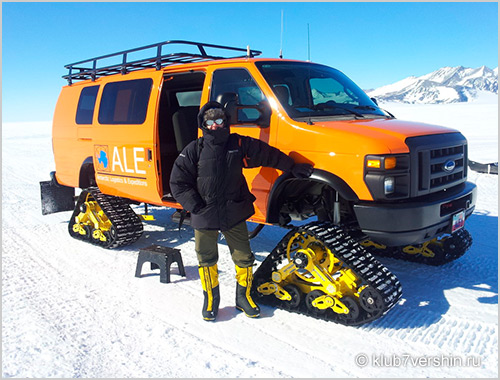

The 4,892-meter-high Mount Vinson massif is located approximately 1,200 km from the South Pole and 2,000 km from the northern tip of the Antarctic Peninsula. Coordinates: 78°35’S Sh – 85°25’W. At 4,892 meters, it is the highest peak on the Antarctic continent. Vinson is part of the Ellsworth Range, which rises from the vast Ronne Ice Shelf. During the summer months, from November to January, the area receives 24 hours of sunlight. However, even under polar day conditions, temperatures during these months range from -40 to -70 degrees Celsius. Average snowfall on Vinson is low, with strong winds contributing only about 18 inches of snow per year. Mount Vinson is named after U.S. Congressman Carl Vinson of Georgia, who campaigned for decades for Antarctic exploration. Climbing Vinson Massif is often referred to as “the key to the Seven Summits Project.” A technically straightforward mountain, it is often inaccessible due to the high cost of the expedition.
Antártida
Mt. Vinson
16 days
Standard Route
1
78°31′32″S 85°37′02″O
Live weather report
Sentinel Range
MONTE VINSON: This unique expedition offers an incredible adventure into the remote interior of the frozen continent to climb Antarctica’s highest peak and one of the legendary Seven Summits. Rising above the Antarctic Plain at 4,897 m (16,067 ft), Mount Vinson is the tallest peak in Antarctica and the most remote of the Seven Summits.
For many, an Antarctic expedition to Vinson is one of the most memorable experiences of their mountaineering career. Climbing in Antarctica is a true adventure, combining an incredible mountain, challenging conditions, and an unwavering sense of exploration as you venture into the most desolate continent on Earth.
Trip Summary:Santiago, Chile – Punta Arenas – Patriot Hills – Vinson Massif Base Camp – Summit – Vinson Massif BC – Patriot Hills – Punta Arenas
Why go there?
An expedition to Vinson Peak is often referred to as the “Key to the Seven Summits.” While the mountain itself doesn’t present significant technical difficulties, access is extremely challenging. There are two main reasons for this: its extreme remoteness and the high cost of any expedition. Therefore, a trip to Vinson Massif is exceptionally interesting and prestigious. Very few people have done it!
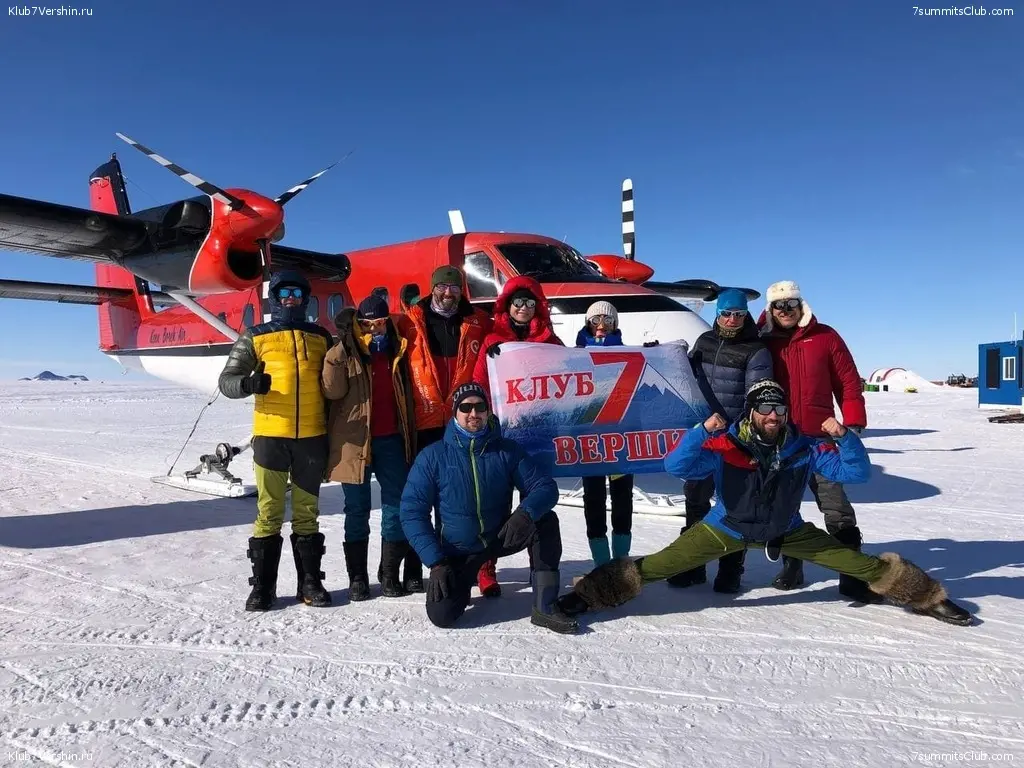
Our program begins in Punta Arenas, Chile. From there, an IL-76 aircraft takes us to Patriot Hills in Antarctica. This is a Chilean-owned airstrip leased by Americans for their tourist flights. From here, a small plane takes us to Vinson Massif Base Camp (BC), where we set up our tents. From here, after establishing Camps 2 and 3, we depart for the summit.
Antarctica is an extremely cold place, even in summer (more like a mild winter), but in return, we’ll have 24-hour sunshine, won’t need headlamps, and can conserve battery power.
We suggest arriving in Punta Arenas at least 3 days before the official start of the expedition. Due to the unstable weather in the area, our outbound flight cannot be scheduled too far in advance; the date must be adjusted to the weather conditions. The wait shouldn’t be too long (1-3 days), but unfortunately, a 10-day wait has been reported.
Region Description:
The Vinson Massif is part of the Sentinel Range (Ellsworth Mountains), located in West Antarctica and overlooking the Ronne Ice Shelf. Discovered in 1935 by American explorer Lincoln Ellsworth, it is the highest massif on the continent, and the highest peak in Antarctica is Mount Vinson, at 4,897 m (16,066 ft).
Please note that the itinerary below is for guidance only. We will adapt it as needed depending on weather conditions,
the acclimatization of the team, etc. Flights could be combined into a single day if necessary,
more time could be spent at some camps, or alternatively, the expedition could be much shorter if everything goes well, and we could
return to Chile earlier than planned.
4.892 m
5-7 hours
Hotel + Lodge + Tent
Spring
2 - 15 PEOPLE
Overnight
Hotel
Flight
Arrival in Antarctica
Driving
Approx. 1 hour
Hiking
Approx. 1 hour
Meals
– / – / –
Overnight
Hotel
Drive
Approx. 3 hours
Hiking
Approx. 5 hours
Meals
B / L / D
Here is the translation into English:
Overnight
Hotel
Drive
Approx. 1 hour
Hiking
Approx. 1 hour
Meals
B / L / D
Overnight
Hotel
Drive
Approx. 3 hours
Hiking
Approx. 5 hours
Flight
Travel by plane
Meals
B / L / D
Overnight
Hotel
Drive
Approx. 2 hours
Hiking
Approximately 2 hours
Flight
Travel by plane
Meals
B / L / D
Overnight
Hotel
Briefing
Expedition briefing
Drive
Approx. 2 hours
Hiking
Approx. 5 hours
Meals
B / L / D
Overnight
Camping
Hiking
approx. 5 hours
Meals
B/L/D
Overnight
Camping
Hiking
approx. 5 hours
Climbing
approx. 6 hours
Meals
B/L/D
Overnight
Camping
Hiking
approx. 5 hours
Climbing
approx. 1 hour
Meals
B/L/D
Overnight
Camping
Hiking
approx. 5 hours
Climbing
approx. 6 hours
Meals
B/L/D
Overnight
Camping
Hiking
approx. 5 hours
Climbing
approx. 12 hours
Meals
B/L/D
Overnight
Camping
Hiking
approx. 5 hours
Climbing
approx. 6 hours
Meals
B/L/D
Overnight
Camping
Hiking
approx. 5 hours
Meals
B/L/D
Overnight
Camping
Hiking
approx. 5 hours
Meals
B/L/D
Overnight
Hotel
Driving
approx. 1 hour
Hiking
approx. 1 hour
Flight
Return home by plane
Meals
B/-/-
Overnight
Hotel
Driving
approx. 1 hour
Hiking
approx. 1 hour
Flight
Return home by plane
Meals
B/-/-
International airfare to and from Punta Arenas, Chile (PUQ).
Multiple-entry visa for Chile (required for re-entry after the expedition).
Accommodation, meals, and additional expenses due to flight delays in the city.
Personal clothing and technical gear for camping and climbing in Antarctica.
Cost per additional kilogram over the 25 kg allowance (approx. USD $77 per kilo).
Medical and evacuation insurance (minimum USD $150,000) covering climbing up to 5,000 m.
Any expenses arising from an early return from Antarctica for personal or medical reasons.