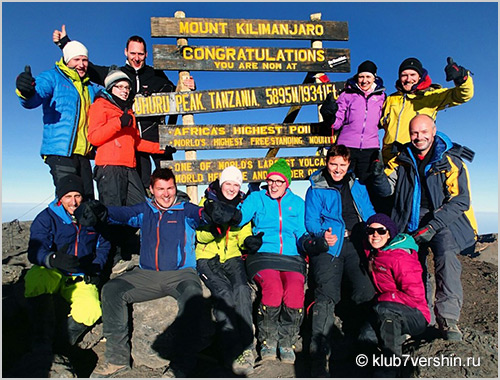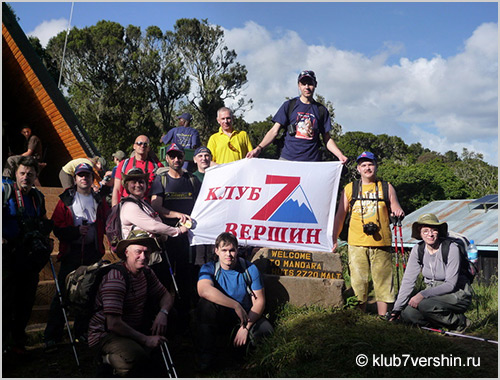
Climbing Mount Kilimanjaro (5,895 m), Africa’s highest peak, is included in the 7 Summits Club and 7 Volcanoes of the World projects. Kilimanjaro is accessible not only to experienced climbers but also to beginners. No special mountaineering training is required, but you should dedicate sufficient time to preparation and pay close attention to route selection, equipment, and the tour operator. The success of your ascent and your overall experience will largely depend on these factors!
África
Mt. Kilimanjaro
9 days
Machame Route
1
03°04′33″S 37°21′12″E
Live weather report
Kilimanjaro Massif
Trip Overview:
Moshi – Marangu Gate – Mandara – Horombo – Kibo Hut – Uhuru Peak – Horombo – Moshi – Lake Manyara – Ngorongoro – Moshi
Why Go There?
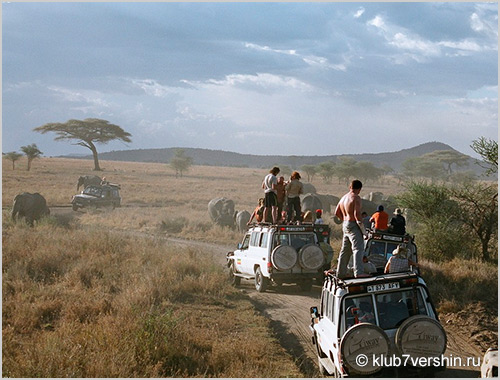
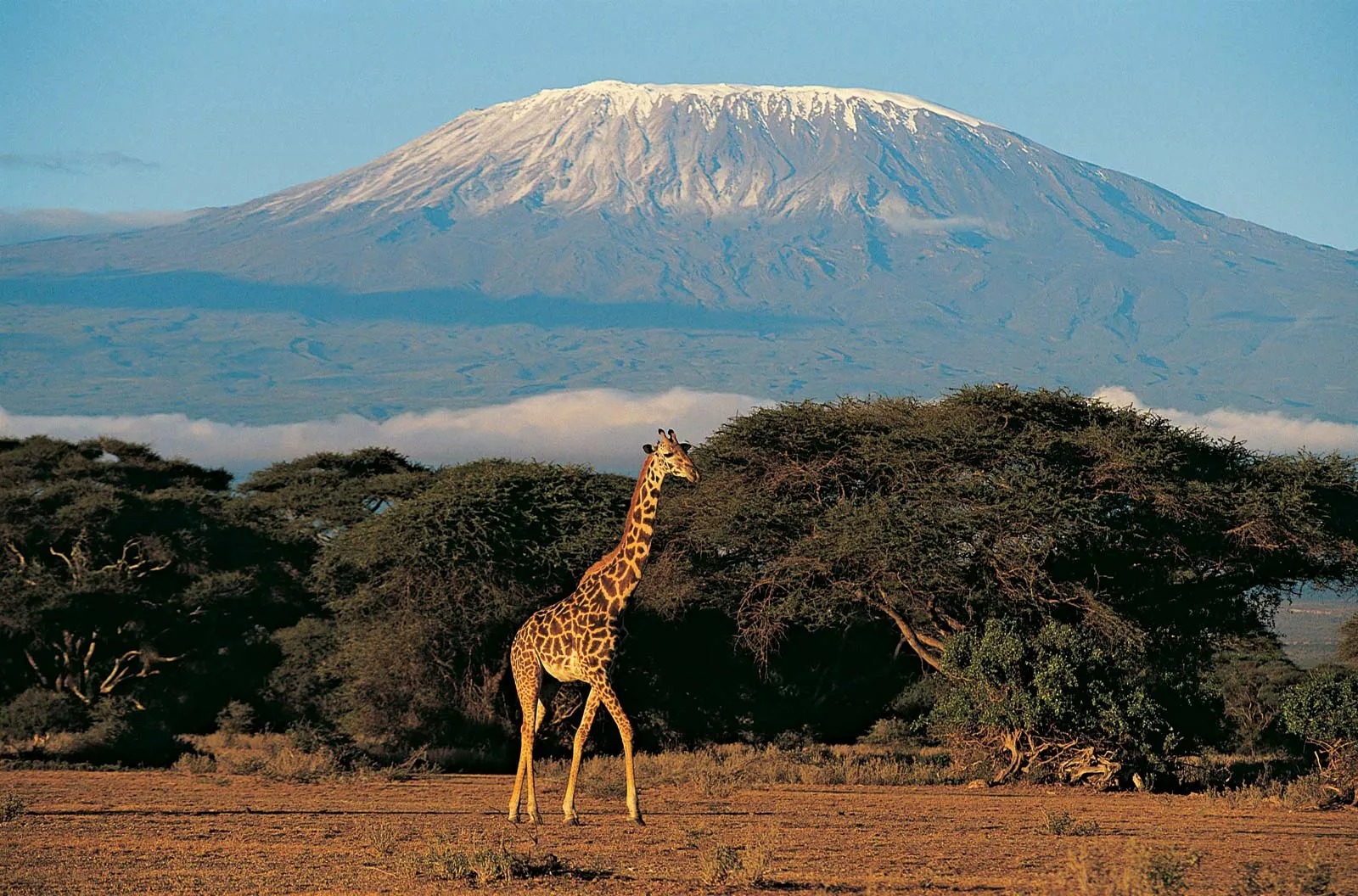
Mount Kilimanjaro stands at 5,895 meters and is an extinct volcano with 3 peaks: Kibo, Shira, and Mawenzi! Africa’s highest summit is one of the most beautiful places in the world. The mountain is entirely located in Tanzania. Kilimanjaro is a non-technical mountain that can be climbed by anyone with reasonably good fitness and patience. There are many different routes, each passing through rainforest, moorland, and glaciers. Most people take the opportunity to enjoy the wildlife paradise and often combine a safari with their trip.
Location: 3°04′ South Latitude, 37°21′ East Longitude.
Kili is the easiest of the 7 Summits, making it the most popular. Our route climbs moderate slopes and is equipped with fairly comfortable huts (with dormitories and dining areas).
Choosing the Machame Route for your Kilimanjaro trek means gentle acclimatization and incredible views. This option is the second most popular among climbers, and the number of other climbers can be high.
5.895 m
5-7 hours
Hotel + Lodge + Tent
Spring
2 - 15 PEOPLE
Night
Hotel
Flight
Arrival in the USA
Drive
Approx. 1 hour
Hiking
Approximately 1 hour
Meals
-/-/-
Overnight
Accommodation
Drive
Approx. 4 hours
Hiking
Approximately 5 hours
Meals
Breakfast/Lunch/Dinner
Elevations: Machame Camp (2834 m) – Shira Camp (3840 m)
Route distance: 10 km Trekking duration: 5-6 hours
You will wake up early at Machame Camp and, after breakfast, climb for an hour to the top of the forest, then for 2 hours through a gentle moorland. After a short lunch and rest, you will continue climbing up a rocky ridge towards the Shira Plateau, where you can see Kilimanjaro’s great Western Breach with its stunning glaciers. At times, the walls of the Western Breach are draped with extensive curtains of ice. You are now west of Kibo, on the opposite side of the mountain from the Marangu Route.
After a short hike to the west, you will reach Shira Camp. The porters will boil drinking and washing water before serving dinner. The night at this exposed camp will be colder, with temperatures dropping below freezing.
Overnight
Camping
Transport
Approx. 5 hours
Hiking
Approx. 6 hours
Meals
B/L/D
Elevations: Shira Camp (3840 m) – Lava Tower (4630 m) – Barranco Camp (3950 m) Route distance: 15 km
Trekking duration: 6-8 hours
Environment: Semi-desert
After breakfast, you will hike east on a trail that becomes steeper above the higher vegetation, heading toward the imposing mass of Kilimanjaro. After several hours, you will cross a rocky landscape until reaching the prominent landmark known as Lava Tower at 4,630 m. This rugged remnant of Kilimanjaro’s ancient volcanic activity is several hundred feet high, and the trail passes right beneath it. For an extra challenge, those who are sure-footed can scramble to the top of the tower.
After a lunch stop near Lava Tower, you will descend for 2 hours below the lower cliffs of the Western Breach and the Breach Wall to Barranco Camp at 3,950 m. There are numerous photo opportunities on this hike, especially if the walls are adorned with ice. Barranco Camp is located in a valley below the Breach and the Great Barranco Walls, which should provide a memorable sunset while you wait for dinner. On this day, pay close attention to any signs of altitude sickness.
Overnight
Camping
Hiking
Approx. 6-8 hours
Meals
B/L/D
Wake up early, have breakfast, and begin the ascent of the Barranco Wall (we recommend leaving camp as early as possible to avoid the crowds from other groups). Climbing the gorge wall is not difficult and only takes about an hour. After the climb, you can rest and take photos in front of the Kibo volcano.
Then you will begin a more demanding trek toward Karanga Camp, which involves numerous ascents and descents along the route, but don’t worry—our guides are experts at choosing the optimal pace for the group. Upon arrival at the camp, you will be served a hot lunch. After a couple of hours, you will complete an acclimatization hike toward Barafu Camp with a 200-meter altitude gain, then descend back to camp.
Trek from Barranco Camp to Karanga Camp: Elevation Change: Barranco Camp (3,960 m) — Karanga Camp (4,035 m) Hiking distance: 5 km Hiking time: 4–5 hours
Acclimatization hike: Elevation Change: Karanga Camp (4,035 m) — Destination point toward Barafu (4,270 m) Hiking distance: 2.5 km Hiking time: 1–2 hours
Overnight
Camping
Hiking
Approx. 6 hours
Meals
B/L/D
In the morning, after breakfast, you will begin your way to Barafu Base Camp (4,640 m), the starting point for the nighttime ascent to Uhuru Peak (5,895 m). Our team will set up the camp for you in advance, including tents and sleeping bags, so you can relax.
After recovering your strength, you will go on an acclimatization hike toward the intermediate Kosovo Camp (4,800 m) and then return to Barafu, where a hot dinner will be served. It is recommended to spend the rest of the day resting and sleeping before the final summit push during the night.
Trek from Karanga Camp to Barafu Camp: Elevation Change: Karanga Camp (4,035 m) — Barafu Camp (4,640 m) Hiking distance: 6 km Hiking time: 4–5 hours
Acclimatization hike: Elevation Change: Barafu Camp (4,640 m) — Kosovo Camp (4,800 m) Hiking distance: 2 km Hiking time: 1–2 hours
Overnight
Camping
Hiking
Approx. 6 hours
Meals
B/L/D
Although the ascent itself is quite straightforward, the thin mountain air represents a significant challenge. For this reason, every two climbers will have a guide who will monitor their condition throughout the entire climb, prioritizing safety above all. Upon reaching the summit, you will have the opportunity to walk on the nearby glacier.
The descent to 3,820 m at Millennium Camp begins after a two-hour rest upon returning to Barafu Camp. Note: The descent is deceptively easy but features treacherous terrain; 90% of accidents occur here. Watch your step carefully to avoid falls and protect your feet!
Summit Trek and Descent: Altitude: Barafu Camp (4,640 m) — Uhuru Peak (5,895 m) — Millennium Camp (3,820 m) Distance: 15.5 km Estimated time: 7–12 hours
Overnight
Camping
Hiking
Approx. 6 hours
Climbing
Approx. 9 hours
Meals
B/L/D
The location of this final camp, situated much further down the tree line, will allow you to enjoy a good night’s sleep, further enhanced by the satisfaction of having reached the summit.
Breakfast will be followed by the return to 1,650 m at the final point of this adventure: Mweka Gate. After a brief celebration with the entire expedition team and arriving at our offices, you will receive your climbing certificates, followed by a transfer to your accommodation.
Final Descent: Altitude: Millennium Camp (3,820 m) — Mweka Gate (1,650 m) Distance: 12 km Estimated time: 4–5 hours
Overnight
Accommodation
Drive
Approx. 5 hours
Hiking
Approx. 6 hours
Meals
B/L/D
Overnight
Hotel
Drive
Approx. 1 hour
Hiking
Approx. 1 hour
Flight
Flight back home
Meals
B / – / –
International flights to and from Tanzania.
Cost of entry visa to Tanzania.
Lunches and dinners at the hotel (before and after the climb).
Rental of technical and personal gear for the expedition.
Gratuities for the mountain team (Suggested: 200–250 USD per person).
Specialized insurance covering high-altitude activities and evacuation.
Additional charge for a single room (Sngl) at the hotel.