

The Everest 2027 Project is structured into four progressive phases of preparation, training, international cooperation, and expedition, designed to develop real rescue and operational capabilities in extreme mountain environments.
Our preparation and training base camp will take place primarily in the Cordillera Blanca, considered one of the most important tropical mountain ranges in the world and an ideal setting for training in high altitude, glaciers, and technical rescue.
The selected mountains include both acclimatization peaks and highly demanding technical summits:
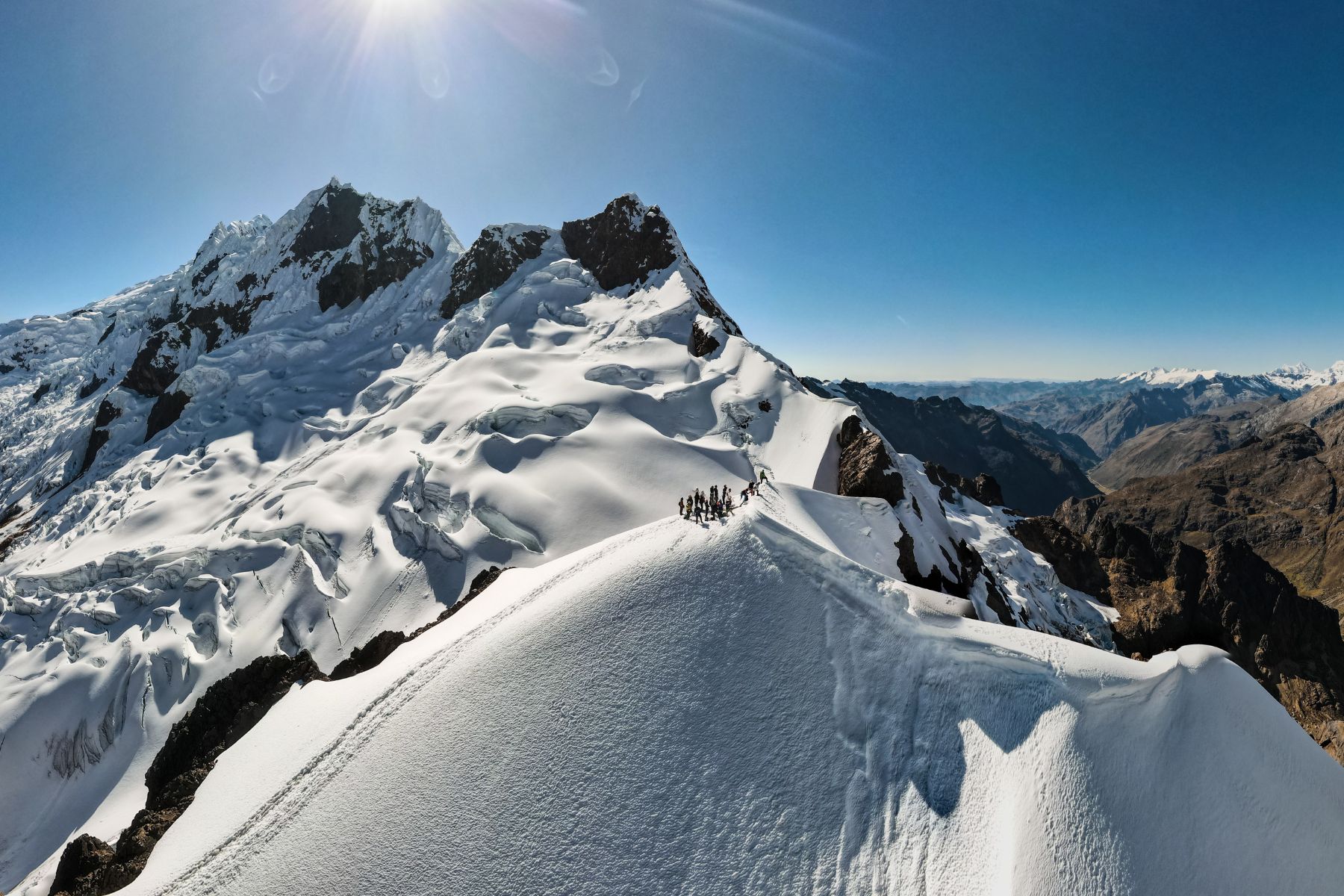
Nevado Mateo is the ideal mountain for beginners in the Cordillera Blanca mountain range. Its ascent is relatively short and accessible, perfect for travelers with little to no prior glacier experience. During the climb, you’ll learn the basics of crampons and ice axes, making it an excellent introduction to high-altitude mountaineering. From its summit, you’ll enjoy panoramic views of Huascarán, Chopicalqui, and Contrahierbas, making this an unforgettable experience.
Nevado Pisco is one of the most popular and highly recommended peaks for those seeking their first major summit in the Andes. Its standard route is moderately technical and safe, ideal for beginner mountaineers in good physical condition. It is frequently used as an acclimatization mountain before attempting more challenging climbs. From the summit, there are some of the most breathtaking views of the Cordillera Blanca, including Alpamayo, Huandoy, and Huascarán.
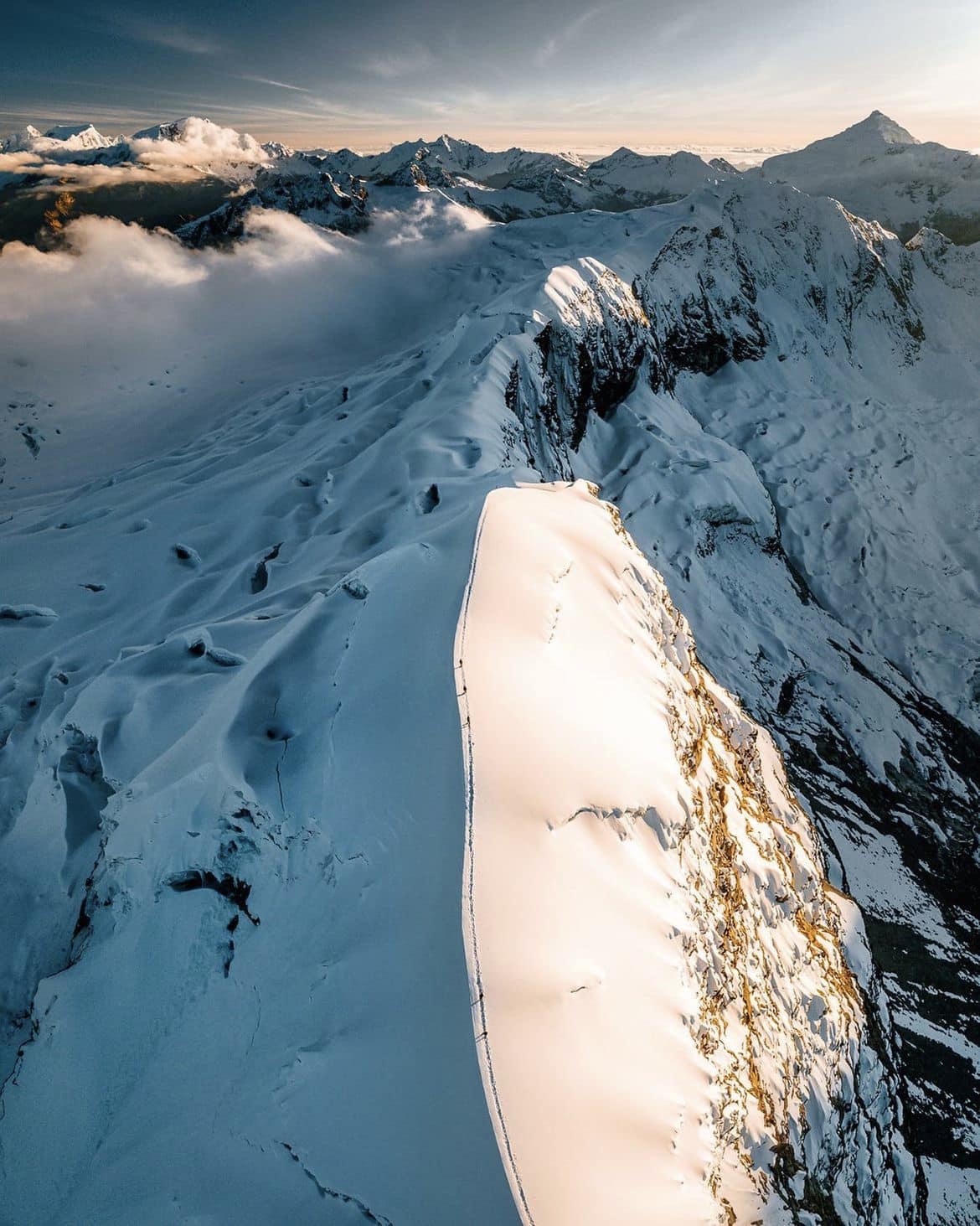
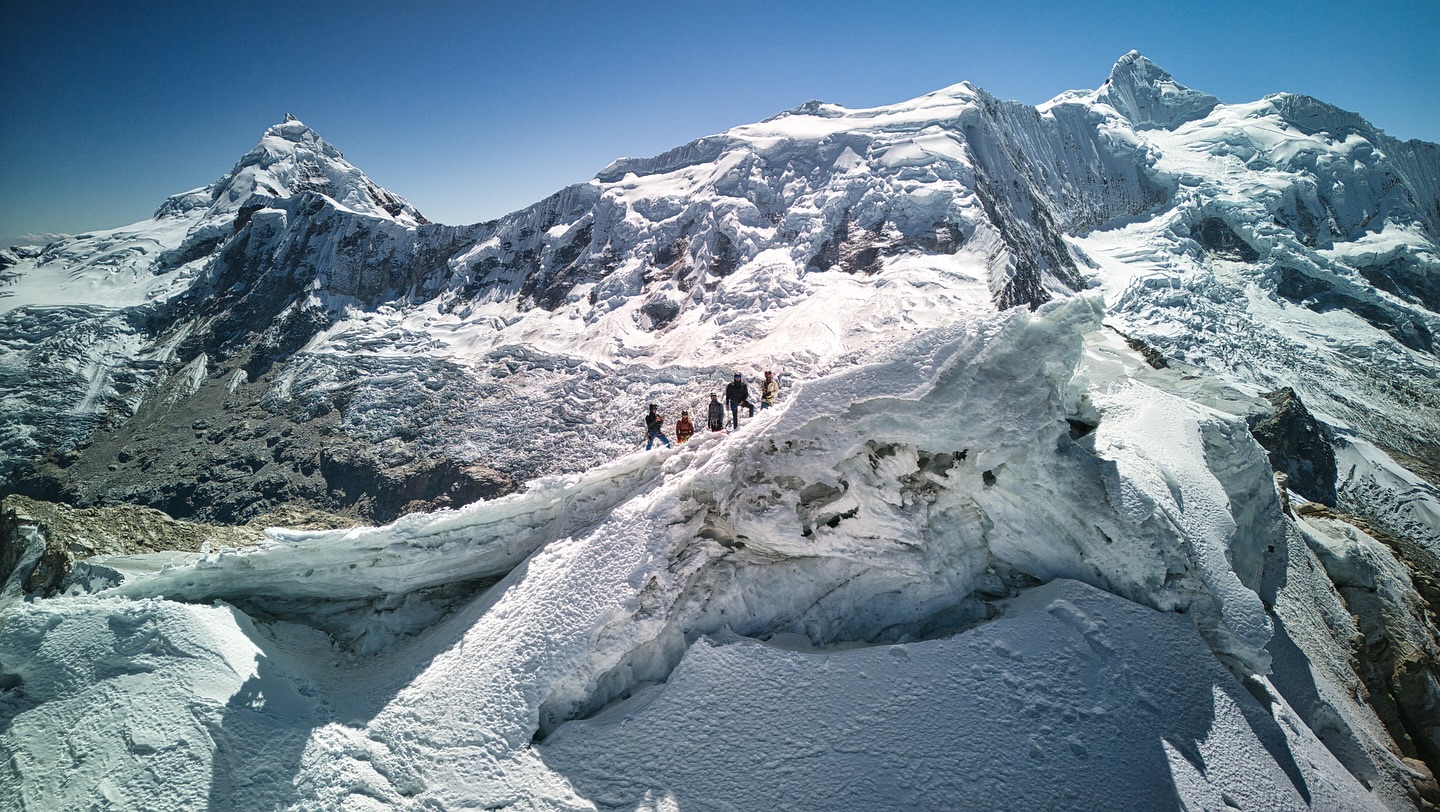
Nevado Ishinca is an excellent option for those looking to take the next step in their mountaineering training. Located in the beautiful valley of the same name, it offers a technical yet accessible route that combines high-altitude hiking and glacier travel. It’s ideal as a first real experience above 5,000 meters and as preparation for more demanding mountains like Tocllaraju or Ranrapalca.
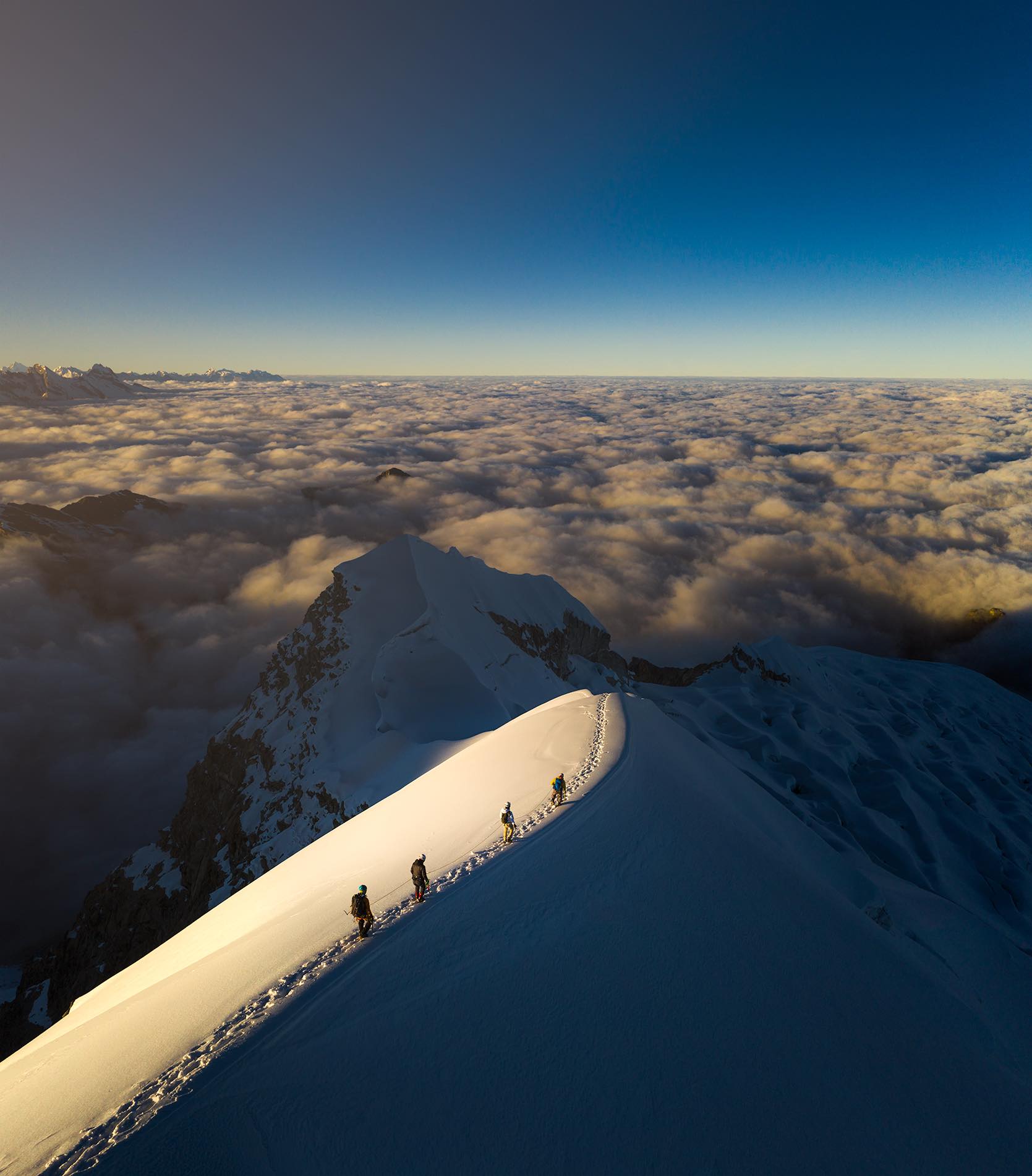
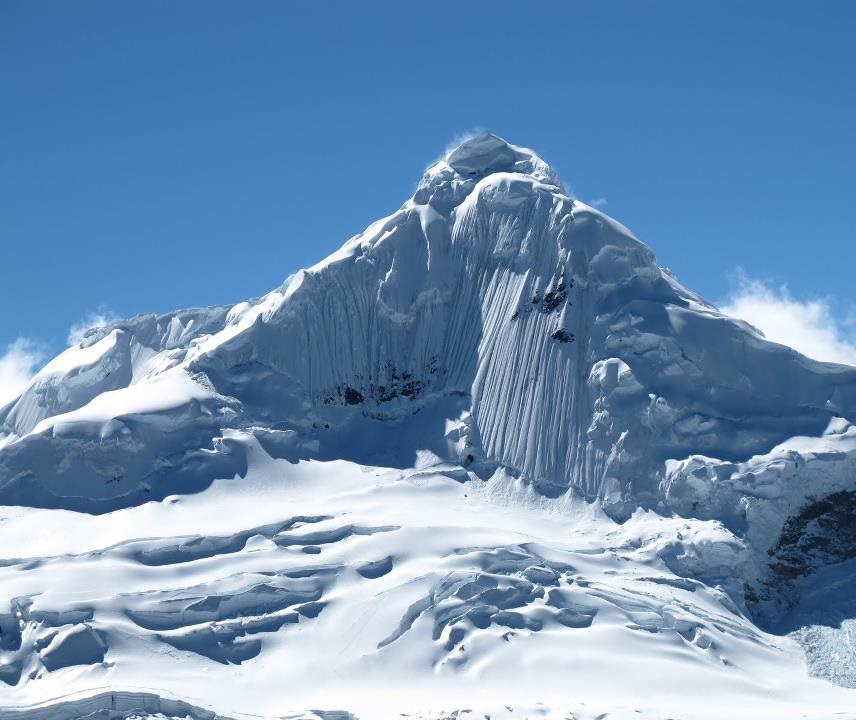
Nevado Copa is one of the highest and least frequented mountains in the Cordillera Blanca. Its ascent is long and physically demanding, ideal for mountaineers seeking an authentic and remote expedition. It requires good acclimatization and glacier experience. From its summit, you can appreciate unique and rarely visited landscapes in the heart of the Peruvian Andes.
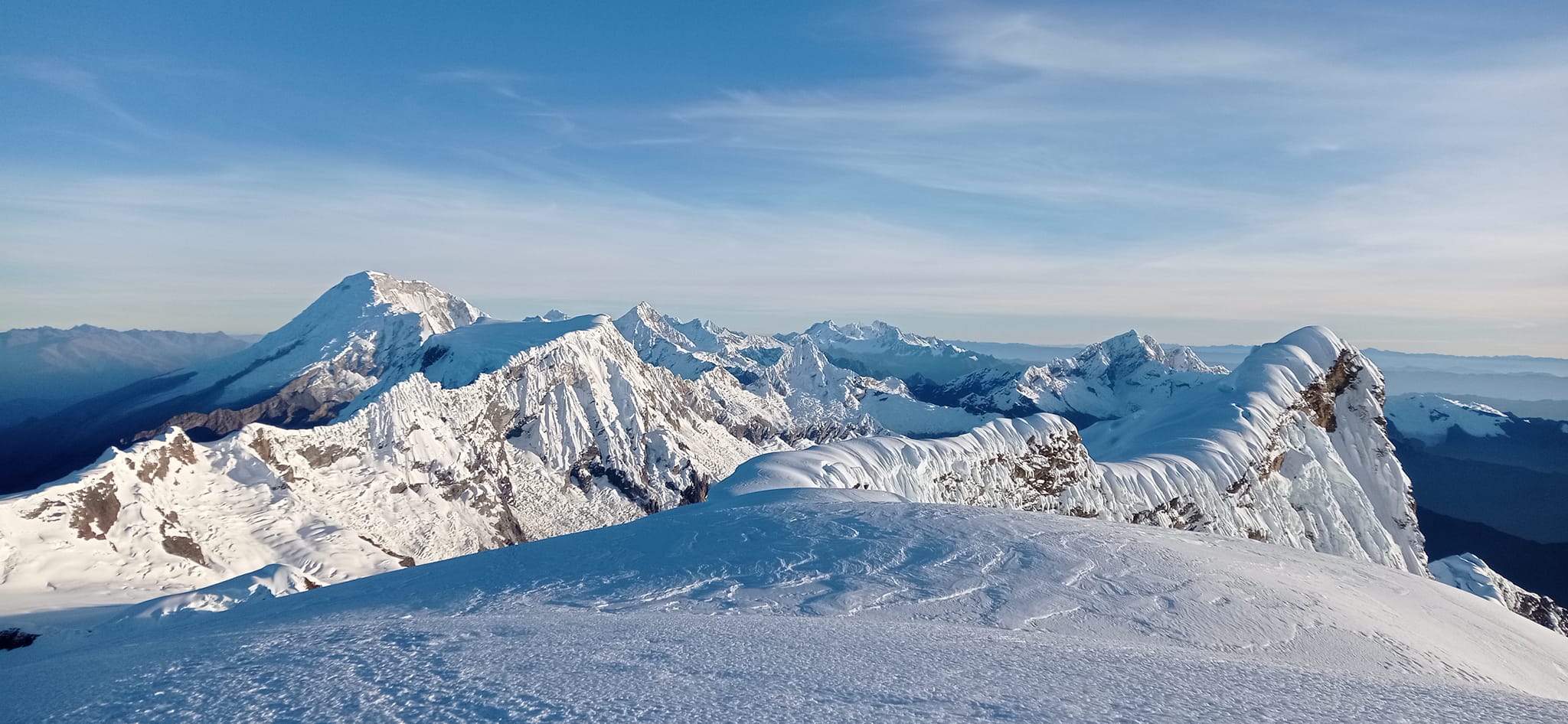
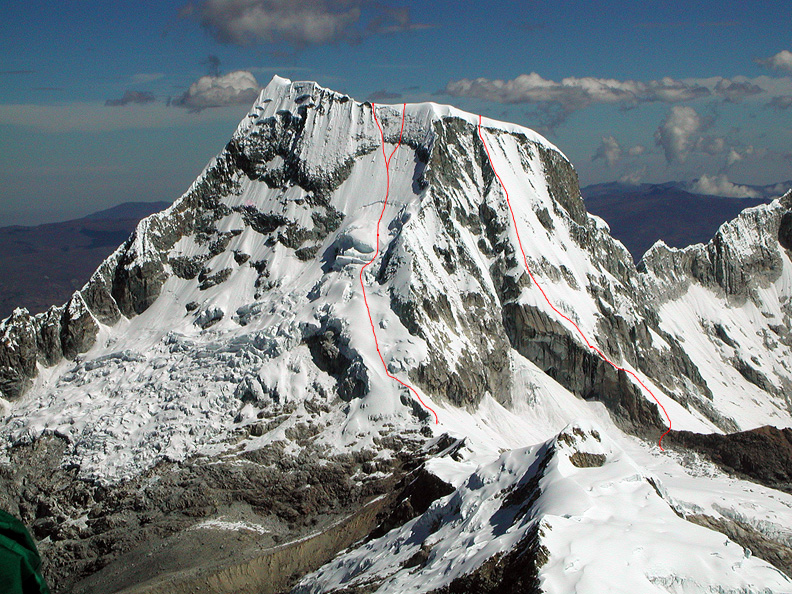
Ranrapalca is an imposing and highly technical mountain. Its ascent involves steep routes, mixed terrain, and demanding ice sections. It is a true challenge reserved for experienced climbers. Reaching its summit is a significant achievement in Andean mountaineering and a high-level technical experience.
Known worldwide as “the most beautiful mountain in the world,” Alpamayo is an icon of international mountaineering. Its famous southwest face offers technical climbing on pure ice, with routes of great aesthetic beauty and difficulty. It is one of the most coveted objectives for mountaineers from all over the world and a unique experience in the Andes.
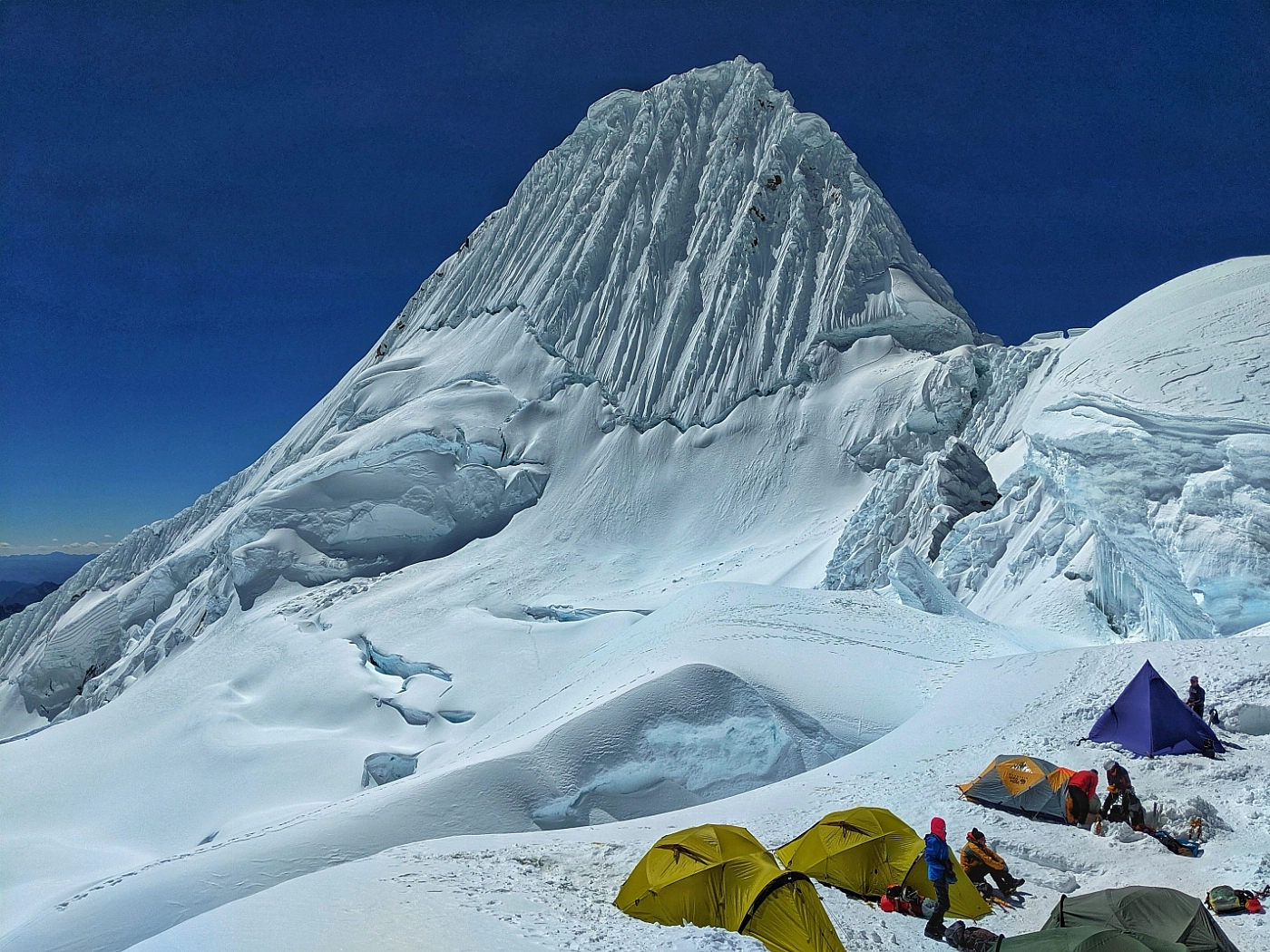
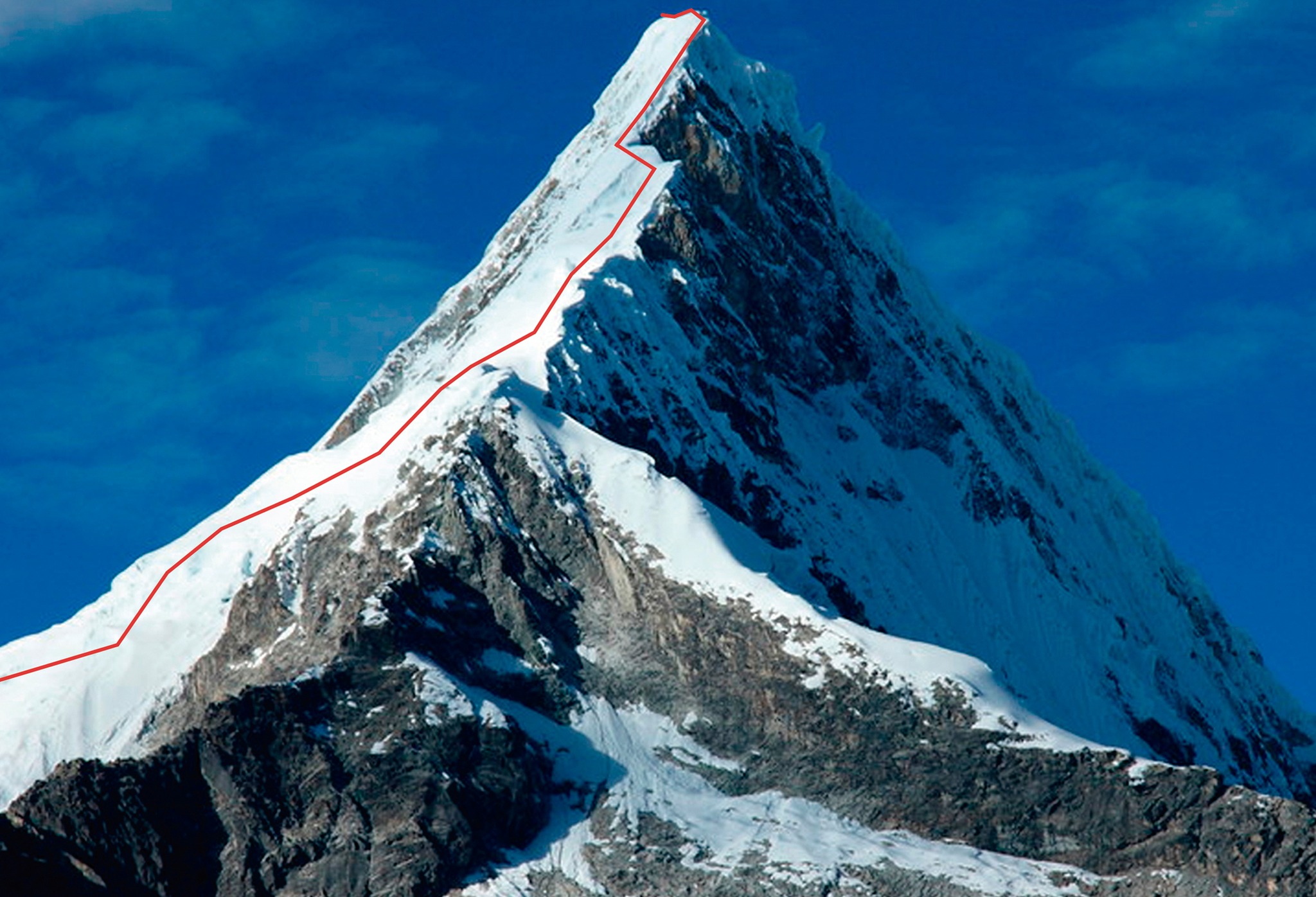
Famous for its perfect pyramid shape, Artesonraju is one of the most photogenic mountains in the world. Its ascent is highly technical and demanding, with steep ice sections requiring complete mastery of equipment and alpine techniques. Recommended only for climbers with extensive high-altitude mountaineering experience.
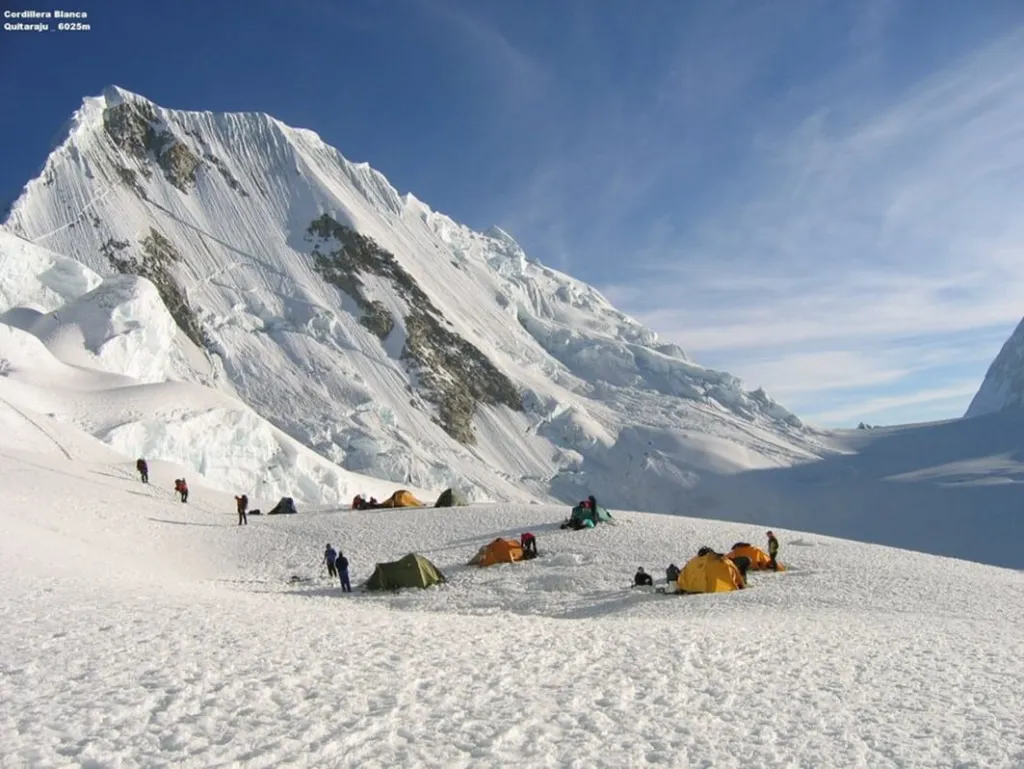
Quitaraju is an excellent alternative to Alpamayo for those seeking a technical and challenging climb in a less crowded environment. It shares the same scenic beauty of the Santa Cruz Valley and offers technical ice routes that test the mountaineer’s skills.
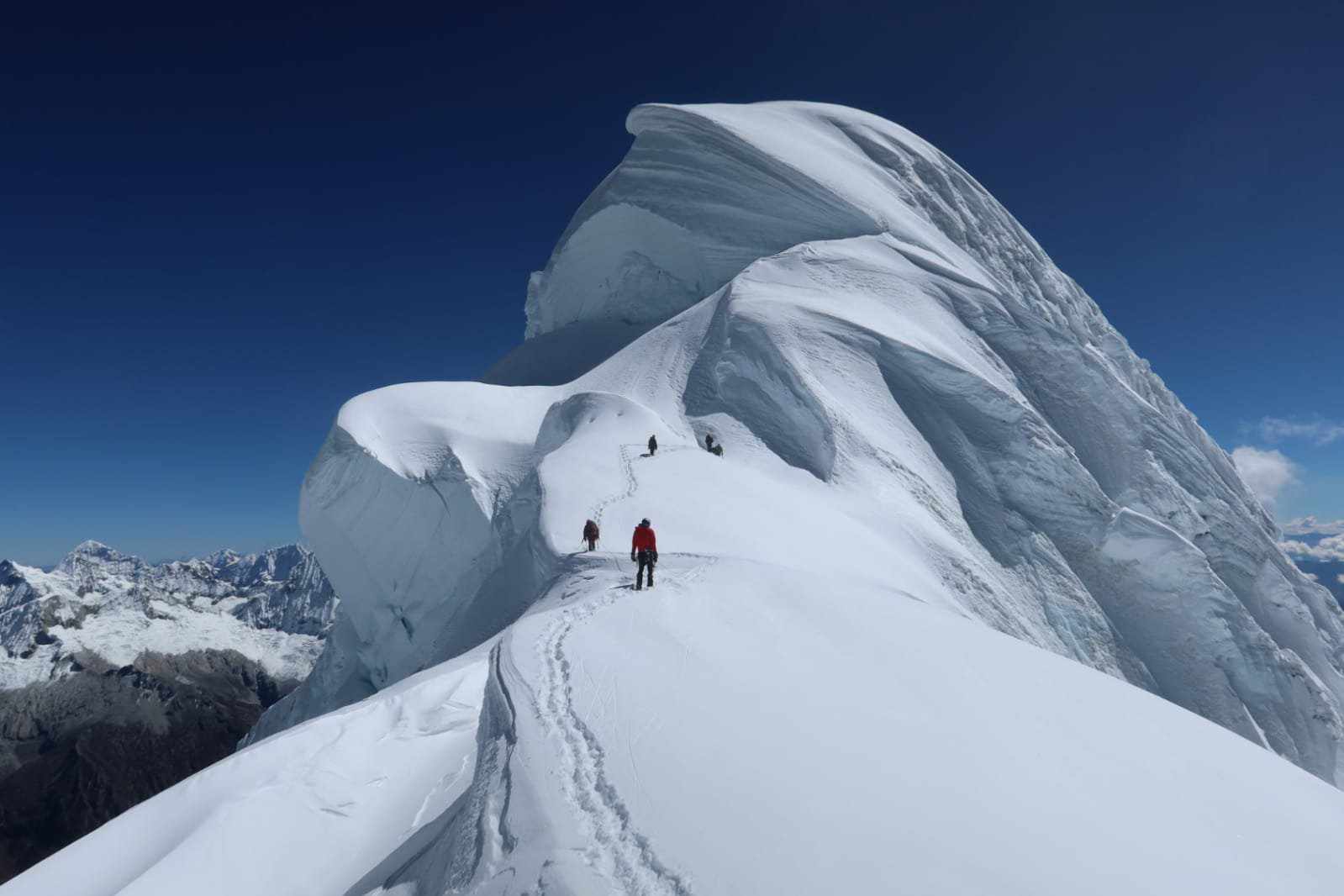
Considered one of the best first 6,000-meter peaks in Peru, Chopicalqui is ideal for mountaineers with prior experience on 5,000-meter mountains. Its route combines long days on glaciers with moderately technical sections. From the summit, there are spectacular views of Huascarán and the entire Cordillera Blanca.
Yanapaccha is a short but technical mountain, ideal for training in ice climbing and glacier travel. It’s a perfect option for acclimatization or as a first technical experience in the Andes. Its proximity to Huaraz allows for the ascent to be completed in just a few days.
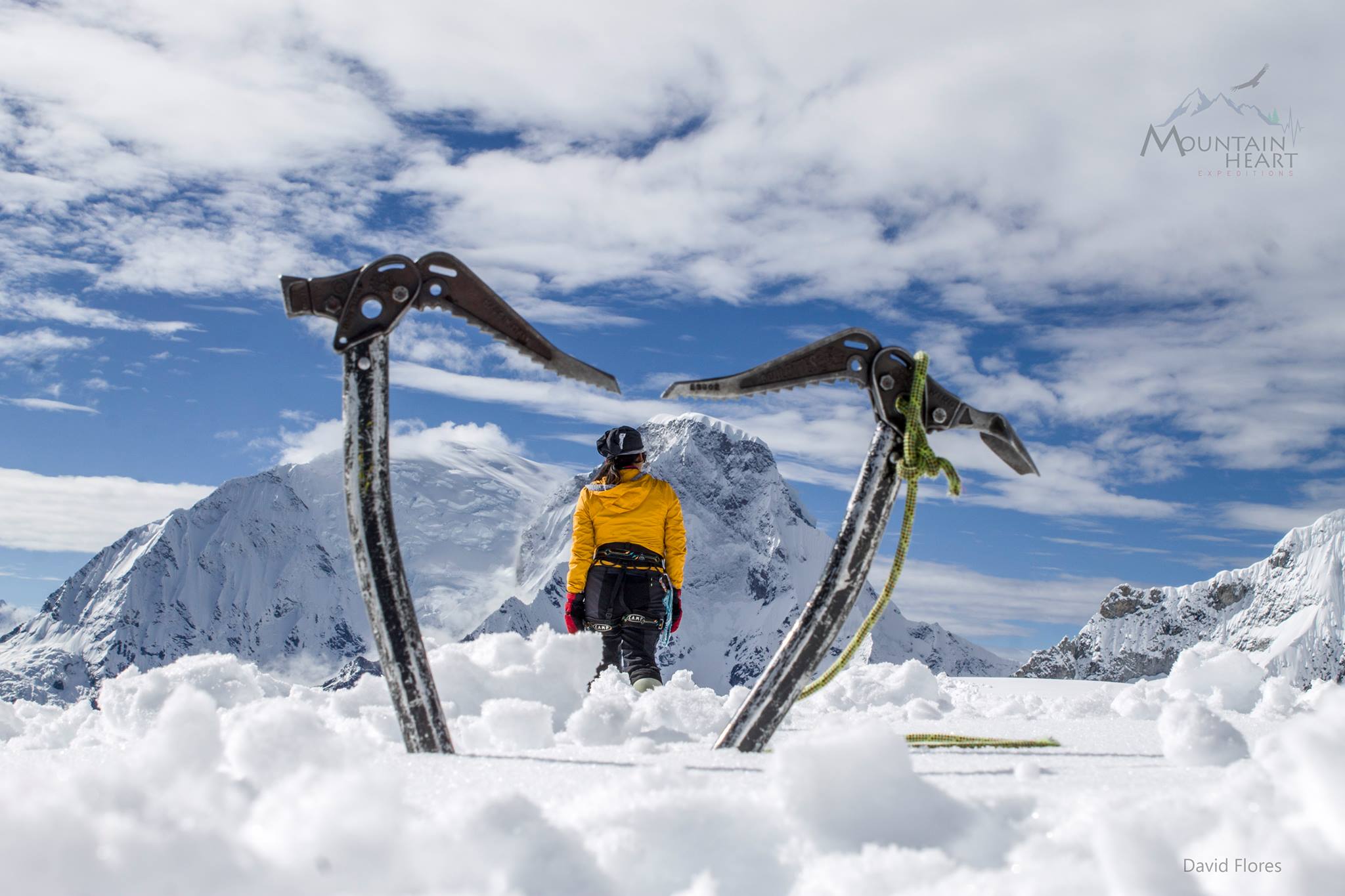
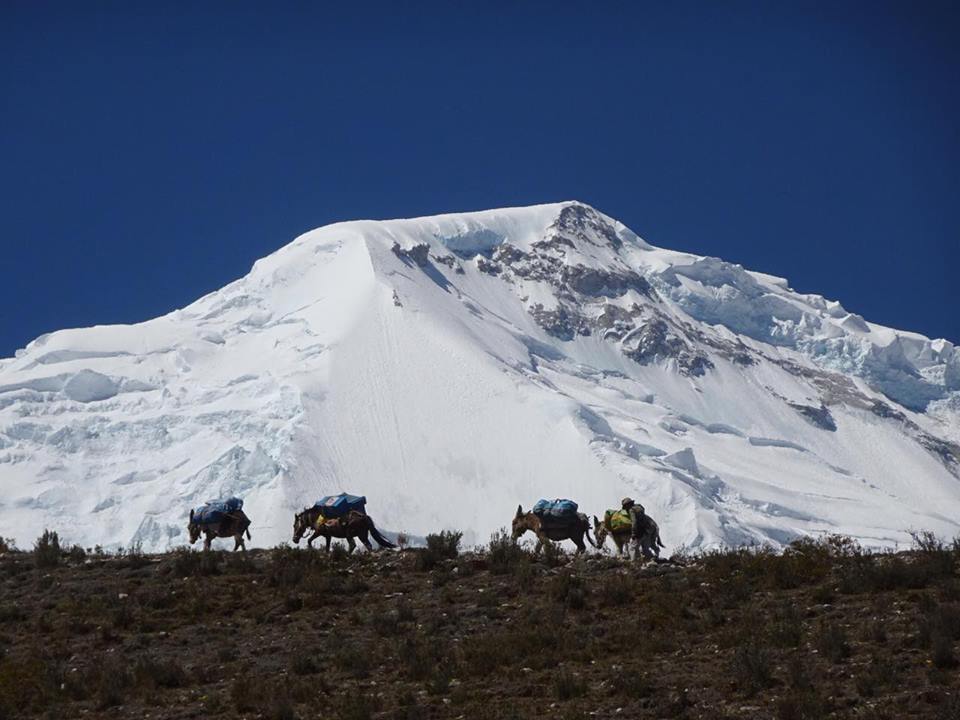
Huascarán is the highest mountain in Peru and one of South America’s greatest challenges. This expedition demands excellent physical, technical, and mental preparation. Its ascent combines long days on glaciers, extreme altitude, and demanding weather conditions. Reaching its summit is one of the greatest achievements for any mountaineer.
As part of the Everest 2027 Project, we use Peru’s most iconic trekking routes as a fundamental part of the technical and physical preparation process. These journeys combine altitude, physical demand, and real mountain conditions, becoming ideal settings for the team’s comprehensive training.
One of the most spectacular routes in the Cordillera Blanca, allowing an approach to the most beautiful mountain in the world. Ideal for progressive acclimation, high-altitude logistics management, and demanding hiking days.
These mountain environments will be our primary training grounds, where we will carry out essential activities such as:
✔ Technical training on glaciers, snow, and mixed terrain
✔ Ice and rock climbing practice
✔ Crevasse rescues and complex evacuations
✔ Operational drills at high altitude
✔ Risk management and expedition logistics
✔ Progressive acclimatization and physical conditioning
✔ Development of endurance for multi-day expeditions
Each of these routes allows us to recreate conditions very similar to those encountered in the Himalayas, preparing the team physically, technically, and mentally.
The Cordillera Blanca and the Cordillera Huayhuash constitute the core of the Everest Project’s training process. Thanks to their diverse landscapes and natural demands, they serve as the perfect laboratory for the preparation of the Asociación Socorro Andino Peruano (S.A.P.) rescue brigades.
This program will enable our rescuers and mountaineers to reach a professional high-performance level, in line with the great challenges of the Himalayas and the future Everest 2027 expedition.
We train in the Andes to operate worldwide.
The Everest Project does not only focus on the technical aspect, but also on the comprehensive development of the team:
The Cordillera Blanca and the Cordillera Huayhuash constitute the heart of the Everest 2027 Project.
Thanks to their unique conditions:
Technical and Operational Foundation: Phase 1 represents the fundamental pillar of the Everest 2027 Project. During this period, the human, technical, and logistical base will be built to successfully face the challenges of the Himalayas. This stage will be developed through a comprehensive program of progressive training in the main mountain ranges and volcanoes of South America, recreating real conditions of expeditions and rescue operations at extreme altitudes.
🎯 Our Objective: To form a highly skilled team, physically and mentally prepared to operate with safety, efficiency, and leadership in the most demanding settings on the planet.
Rigorous selection of rescue brigade members from the Asociación Socorro Andino Peruano (S.A.P.) based on the following criteria:
Only members who meet high professional standards will join the official team.
Cordillera Blanca and Cordillera Huayhuash: Our main laboratory. Glaciers and technical walls for realistic training.
📍 Nevado Ausangate (6,384 m): Adaptation to high altitudes, self-sufficient expeditions, and rescue in isolated areas.
🌄 Chachani Volcano (6,075 m): Progression on volcanic terrain, progressive acclimation, and high-altitude evacuation simulations.
🌋 Misti Volcano (5,822 m): Physical endurance, navigation in volcanic ash, and group management on commercial routes.
🏔️ Coropuna Volcano (6,425 m): The highest volcano in Peru. Advanced training on glaciers, crevasses, and extreme isolation (Himalayan Simulation).
📍 Avenue of the Volcanoes: Internationalization process to consolidate experience on active glaciers and technical northern terrains.
Bolivia (2026): Isla del Sol (Acclimation), Salar de Uyuni (Remote Logistics), and Nevado Huayna Potosí (6,080 m) for the final technical evaluation.
Knowledge transfer in the heart of the Himalayas: The S.A.P. team will travel to Nepal to learn from the Rescue Sherpas, the most experienced professionals in the world.
Training under severe hypoxia, limit physical fatigue, and critical decision-making to reach global operational standards.
Cooperation: Networking with Nepalese organizations and positioning Peru as a South American leader in the field.
The ascent is not just a sporting challenge; it is the final training. Operating as a high-altitude team, self-sufficiency unit, and rescuers in the "Death Zone."
| DAY / DATE | ACTIVITY DESCRIPTION |
|---|---|
| Day 1 – April 15 | Kathmandu (1,400 m) | Arrival in Kathmandu (1,400 m), reception, and check-in. |
| Day 2 – April 16 | Kathmandu (1,400 m) | Cultural tour, official paperwork, and equipment purchase. |
| Day 3 – April 17 | Kathmandu – Lukla – Phakding | Helicopter flight to Lukla (2,860 m) and trek to Phakding (2,640 m). |
| Day 4 – April 18 | Phakding – Namche Bazaar | Hike through the Dudh Kosi valley to Namche Bazaar (3,440 m). |
| Day 5 – April 19 | Namche Bazaar (3,440 m) | Acclimation and short hikes in Namche Bazaar. |
| Day 6 – April 20 | Namche – Tengboche | Ascent to Tengboche Monastery (3,860 m). |
| Day 7 – April 21 | Tengboche – Dingboche | Hike to Dingboche (4,340 m) or Pheriche (4,240 m). |
| Day 8 – April 22 | Dingboche – Lobuche | Trek to Lobuche (4,940 m). |
| Day 9 – April 23 | Lobuche (4,940 m) | Rest and acclimation day in Lobuche. |
| Day 10 – April 24 | Lobuche – Everest Base Camp | ARRIVAL AT EVEREST BASE CAMP (5,350 m). |
| Days 11–13 – April 25 to 27 | Base Camp (5,350 m) | Rest, acclimation, and technical preparation at Base Camp. |
| Day 14 – April 28 | Base Camp – Camp I (6,100 m) | ACCLIMATION ROTATIONS: Crossing the Khumbu Icefall. |
| Day 15 – April 29 | Camp II (6,400 m) | Ascent and overnight at Camp II. |
| Days 16–19 – April 30 to May 3 | Base Camp | Descent and rest at Base Camp. |
| Day 20 – May 4 | Base Camp – Camp I (6,100 m) | Ascent to Camp I. |
| Days 21–22 – May 5–6 | Camp II (6,400 m) | Stay at Camp II for acclimation. |
| Day 23 – May 7 | Camp III (7,300 m) | Ascent and descent back to Camp II. |
| Day 24 – May 8 | Base Camp (5,350 m) | Full descent to Base Camp. |
| Days 25–28 – May 9 to 12 | Namche Bazaar (3,440 m) | Helicopter descent and rest. |
| Day 29 – May 13 | Base Camp (5,350 m) | Helicopter return to Base Camp. |
| Day 30 – May 14 | Base Camp | Preparation for the summit push. |
| Day 31 – May 15 | Camp I (6,100 m) | Push to Camp I. |
| Day 32 – May 16 | Camp II (6,400 m) | Push to Camp II. |
| Day 33 – May 17 | Camp III (7,300 m) | Push to Camp III. |
| Day 34 – May 18 | Camp IV – South Col (8,000 m) | Arrival at the Death Zone. |
| Day 35 – May 19 | Everest Summit (8,848 m) | Summit ascent and descent to Camp II (6,400 m). |
| Day 36 – May 20 | Base Camp (5,350 m) | Full descent to Base Camp. |
| Days 37–46 – May 21 to 30 | Safety days and operational flexibility. |
| Day 47 – May 31 | Kathmandu (1,400 m) | Helicopter flight from Base Camp. Night in hotel. |
| Day 48 – June 1 | Return Home | International flight. |
The Legacy: Turning the Himalayan experience into a direct benefit for strengthening professional rescue in the country.
Specialized courses for S.A.P. rescuers, mountain guides, tourism agencies, and national park personnel.
Relay Training: The Everest team will act as lead instructors on glaciers and mixed terrain.
Creation of national manuals, evacuation plans, and standardized operating procedures for the Andes.
Impact: Immediate application in the Cordillera Blanca, Huayhuash, and Southern Volcanoes.
🏆 True success is not the summit, but the lives that can be saved and the safety provided to Peru's mountaineers.