Everest Base Camp (5400 m / 17,717 ft)
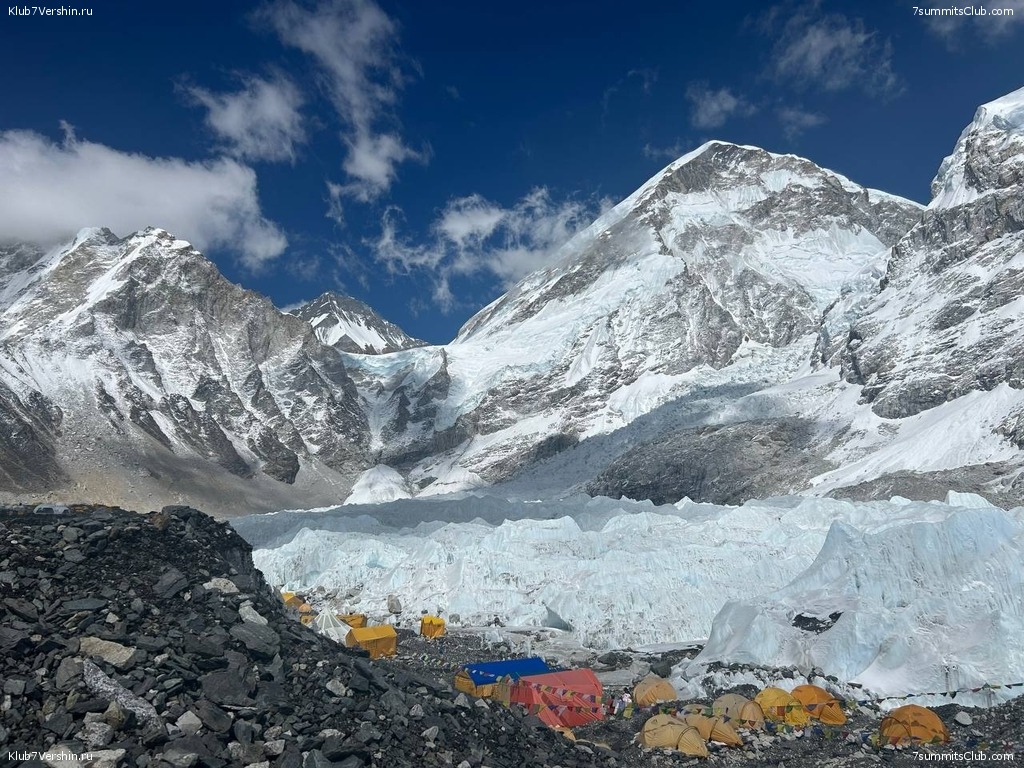
A scenic flight to Lukla begins the trek that will take you to Everest Base Camp (5400 m). The trek to Base Camp offers magnificent views of the Mahalangur range, including the landscapes of Ama Dablam, Pumori, and Nuptse. Finally, you will be welcomed by our top team of Sherpas. At Everest Base Camp, there will be a large number of climbers aiming to summit Everest from their own camps. Among expedition operators, Seven Summit Treks is noted for having the best base camp setup, with a nearby helipad for easy transport of supplies and rescue. Each member will have an individual tent, as well as shared tents with dining, kitchen, showers, communication, and toilet facilities. Before ascending the mountain, we will hold a grand Puja ceremony at Base Camp to appease local deities and pray for good luck and a safe climb. Seven Summit Treks will provide frequent helicopter transfers to EBC, each carrying fresh vegetables, fresh meat, and drinks for our members. The base camp will be a fully equipped facility with a chef, a wide variety of menu options, bakery, café, and an excellent place to socialize with other climbers.
Camp I (6065 m / 19,898 ft)
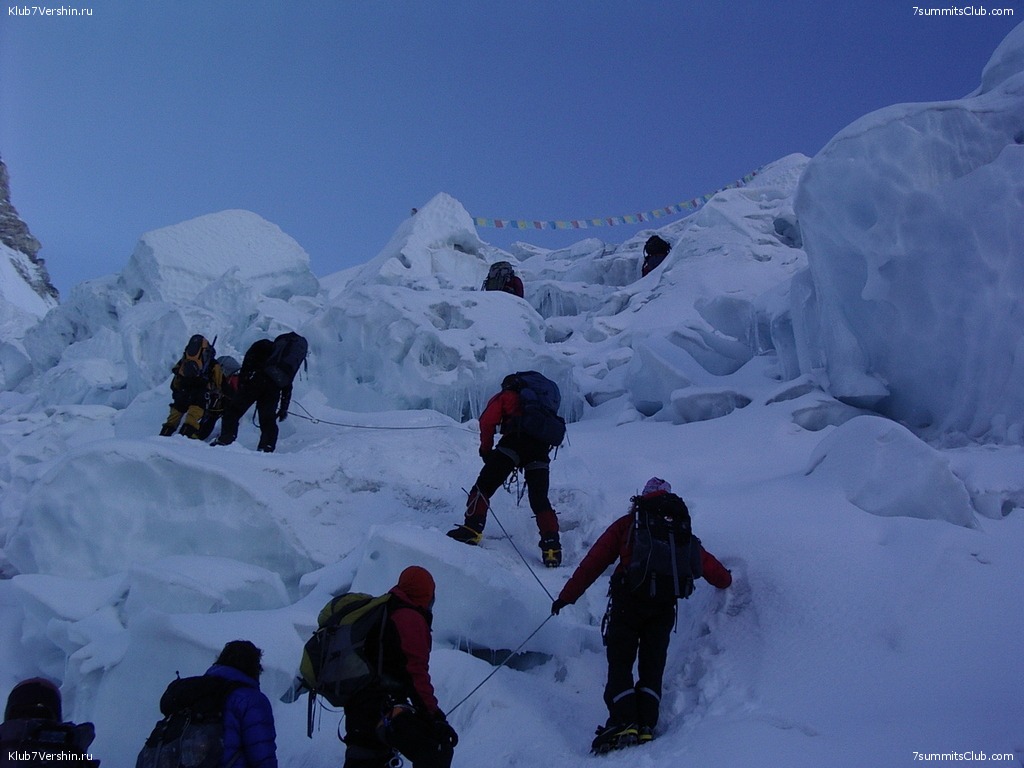
Once you arrive at EBC, your climbing Sherpa or team leader will review basic and advanced Base Camp training. You will cross the Khumbu Icefall, a 600-meter moving ice formation. For better acclimatization, once the Sherpa team has fixed the ropes, you will ascend to Camp I at 6065 m. This section involves mixed terrain with few crevasses and ice on the glacier section. The climb will take approximately 4–5 hours. Frequent rotations between Camp I and Base Camp will be conducted. Camp I is located above the vast Western CWM snowfield. Tents will be set up for 2 people per tent, and a chef will provide hot, fresh meals for climbers.
Camp II (6750 m / 22,146 ft)
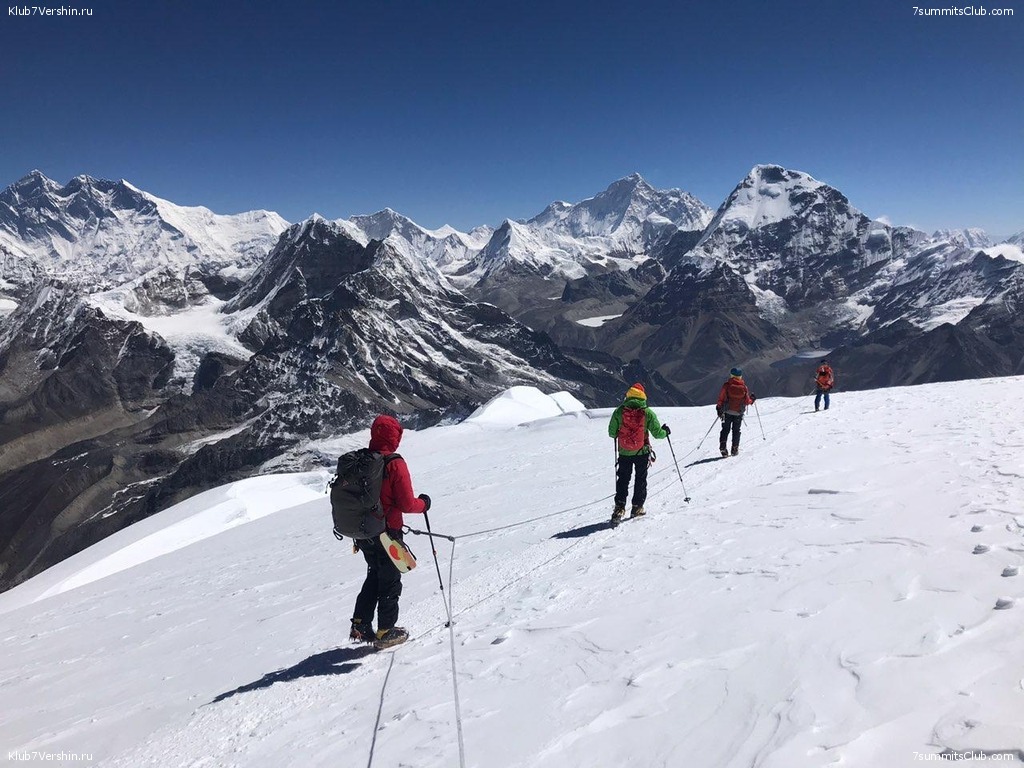
Camp II is situated at 6750 m, just below the massive southwest face of Everest. The climb from Camp I to Camp II involves intermediate ice with some mixed climbing sections. Some rock and ice walls will be climbed, and there is a slightly technical section in the middle of the glacier, but fixed ropes are provided. At Camp II, the SST fixed dining tent with a kitchen is located, making this the main place to spend most nights after Base Camp. Tents are shared at a 2:1 ratio (2 people per tent), and an expedition chef ensures fresh meals at this altitude.
Camp III (7300 m / 23,950 ft)
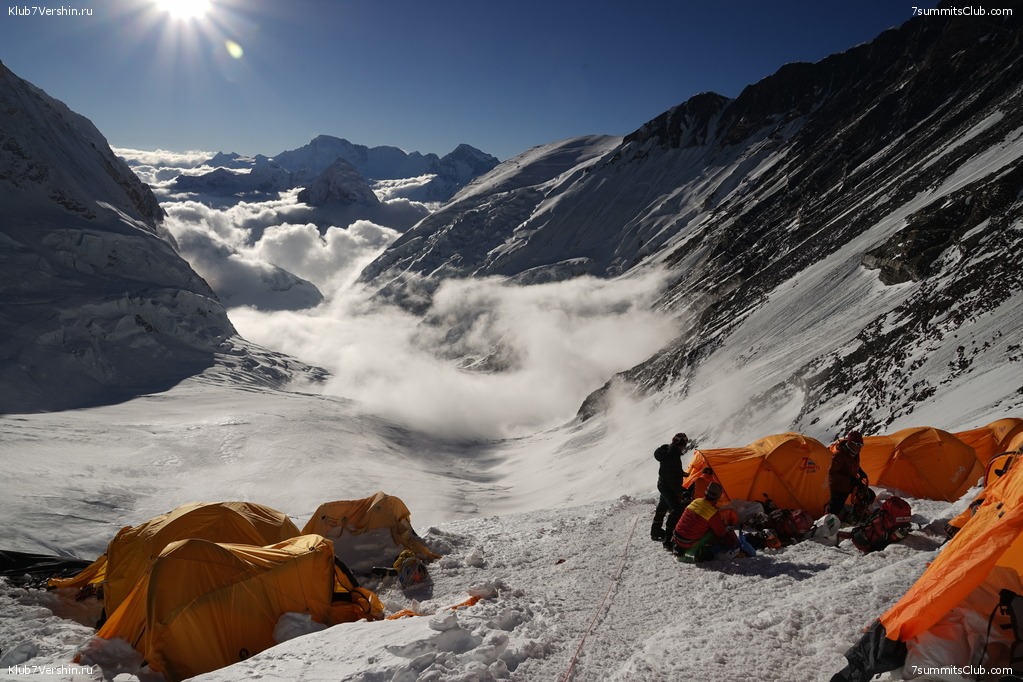
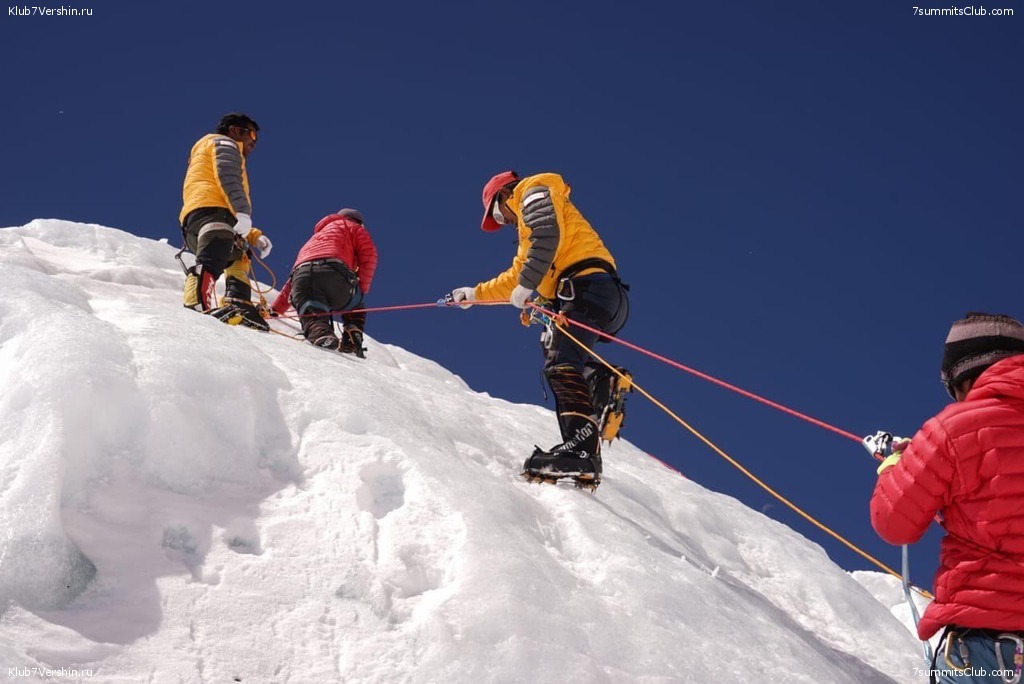
Climbing from Camp II to Camp III involves ascending a landmark called the Lhotse Face, a steep icy slope west of the summit. The ice section is technically challenging, with slopes between 30–45 degrees, but it is safe thanks to fixed ropes. Our veteran Sherpas will guide you up the face to Camp III. You will spend the night at Camp III before heading to Camp IV for the final stretch. Tents at Camp III are shared at the same 2:1 ratio. Due to its location, a fully equipped camp is not possible, so meals will be served by Sherpas to each climber.
Camp IV (7906 m / 25,938 ft)
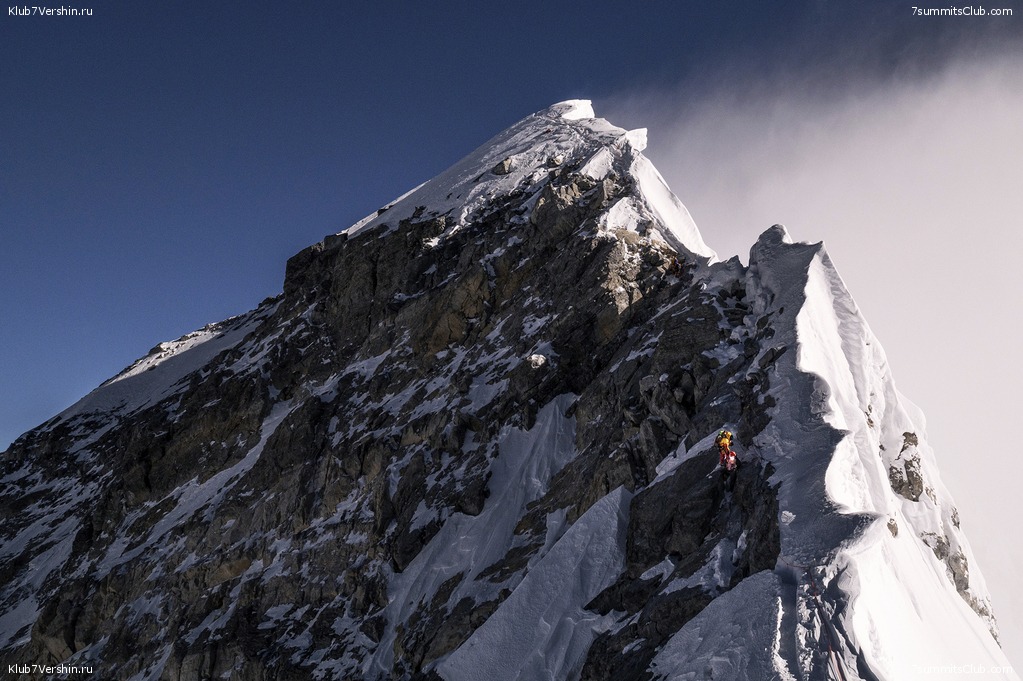
Camp IV, also known as the South Col, is probably the highest pass in the world. This col connects Everest and Lhotse and is the last camp before the Everest summit. Camp IV is a vast, elongated pass reached after crossing the Geneva Spur above Camp III. There are two rock sections before Camp IV: the Yellow Band, an intermediate layer of marble, phyllite, and semi-schist rock, and the Geneva Spur, an anvil-shaped black rock ridge. Both areas have fixed ropes. In climbing, the South Col also marks the beginning of the Death Zone (an elevation unfavorable for normal metabolic processes). You will visit Camp IV twice: first during acclimatization rotations and again for the summit push. Our Sherpa team will have already transported oxygen bottles and set up camps to ensure proper rest even at this altitude. This elevation is generally unsuitable for normal human metabolic function, so primarily carbohydrates and liquids will be consumed for energy, provided by your climbing Sherpa.
Summit Push (8848.86 m / 29,032 ft)
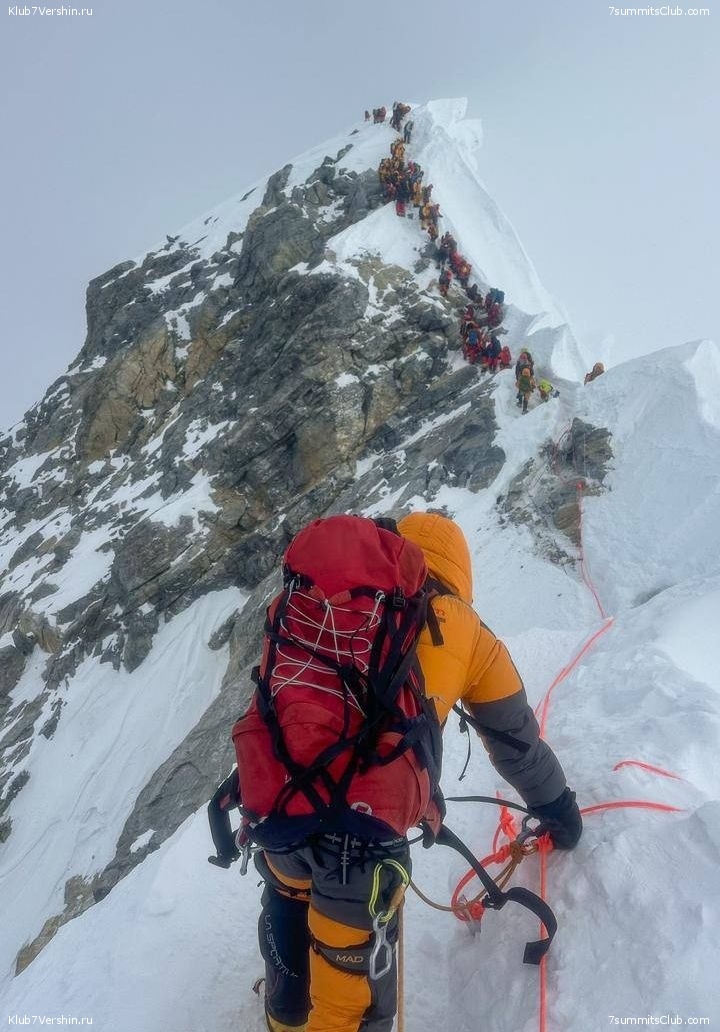
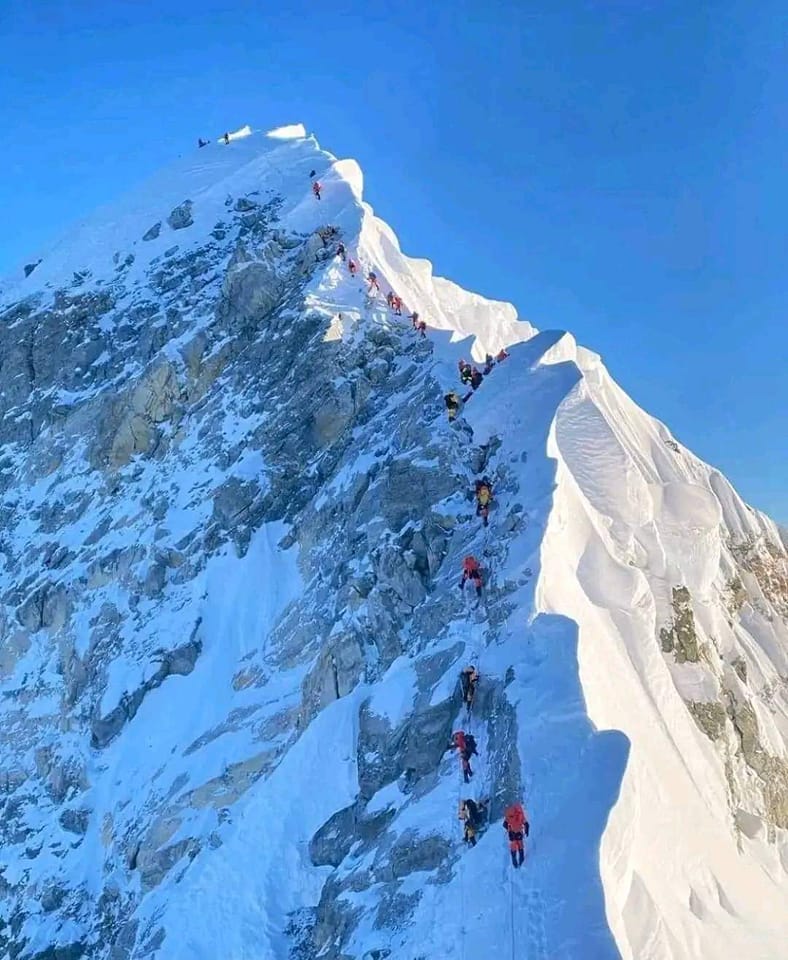
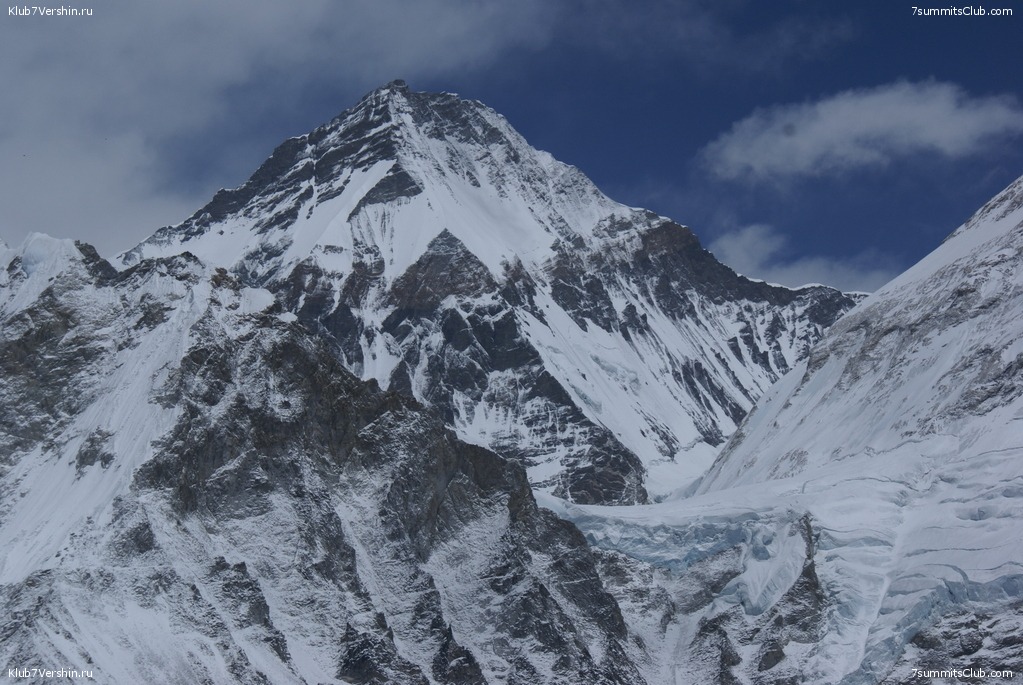
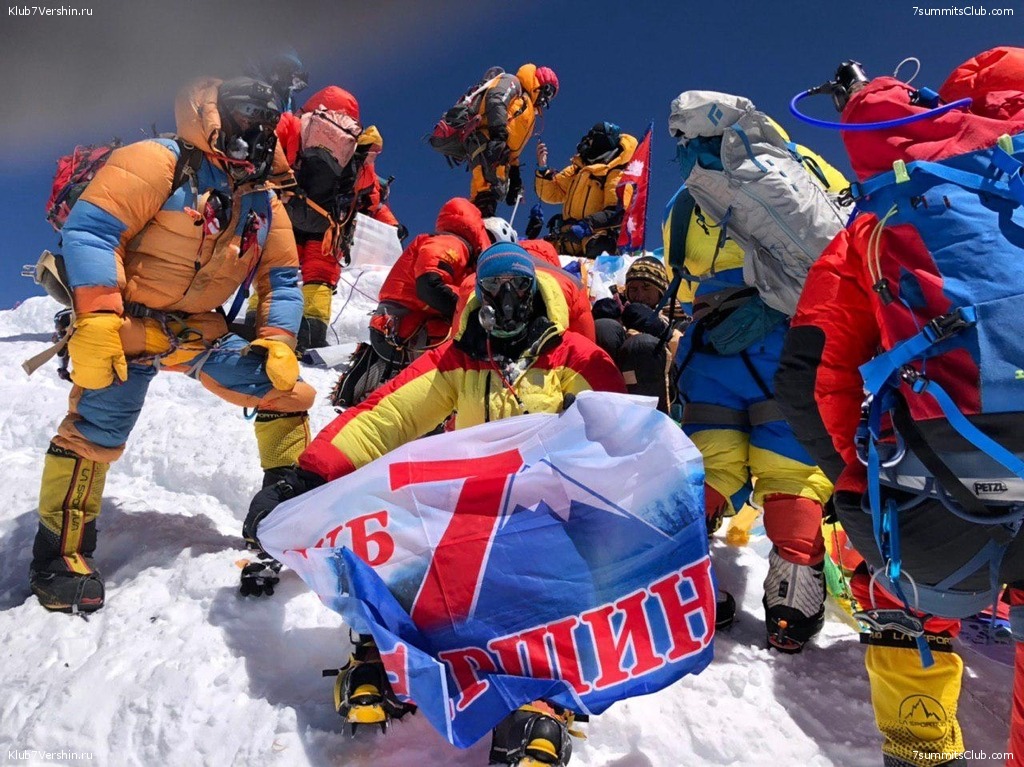
With your veteran climbing Sherpa, you will begin the summit push around midnight. Nights are usually stable for the hard push. It will be a long night, but the joy of seeing the sunrise from the world’s highest point will erase fatigue. You just need to keep going. The route goes along the triangular face above the South Col to the Balcony, the South Summit, and finally the dream summit of Everest. The whole world is now beneath your feet. After taking some photos, you will descend towards…