
Karstensz Pyramid (4,884 m), or simply Karstensz, is the highest peak on the island of New Guinea, which many mistakenly consider part of the Australian mainland. The western part of the island belongs to Indonesia and is officially called Irian Jaya. The expedition to Karstensz is one of our most popular routes. The Indonesians named the peak Puncak Jaya (Victory Peak). Traditionally, it is named after the Dutch navigator Jan Carstensz, who was the first to describe the existence of snow-covered mountains in this equatorial region. His voyage took place in 1623, and at the time, no one in Europe believed him. Due to current global warming, the glaciers in the summit area have a maximum of ten more years to exist.
Indonesia
Mt. Carstensz
7 Days
Nordseite
1
4°04′44″S 137°06′47″E
Live Wetterbericht
Sudirman Gebirge
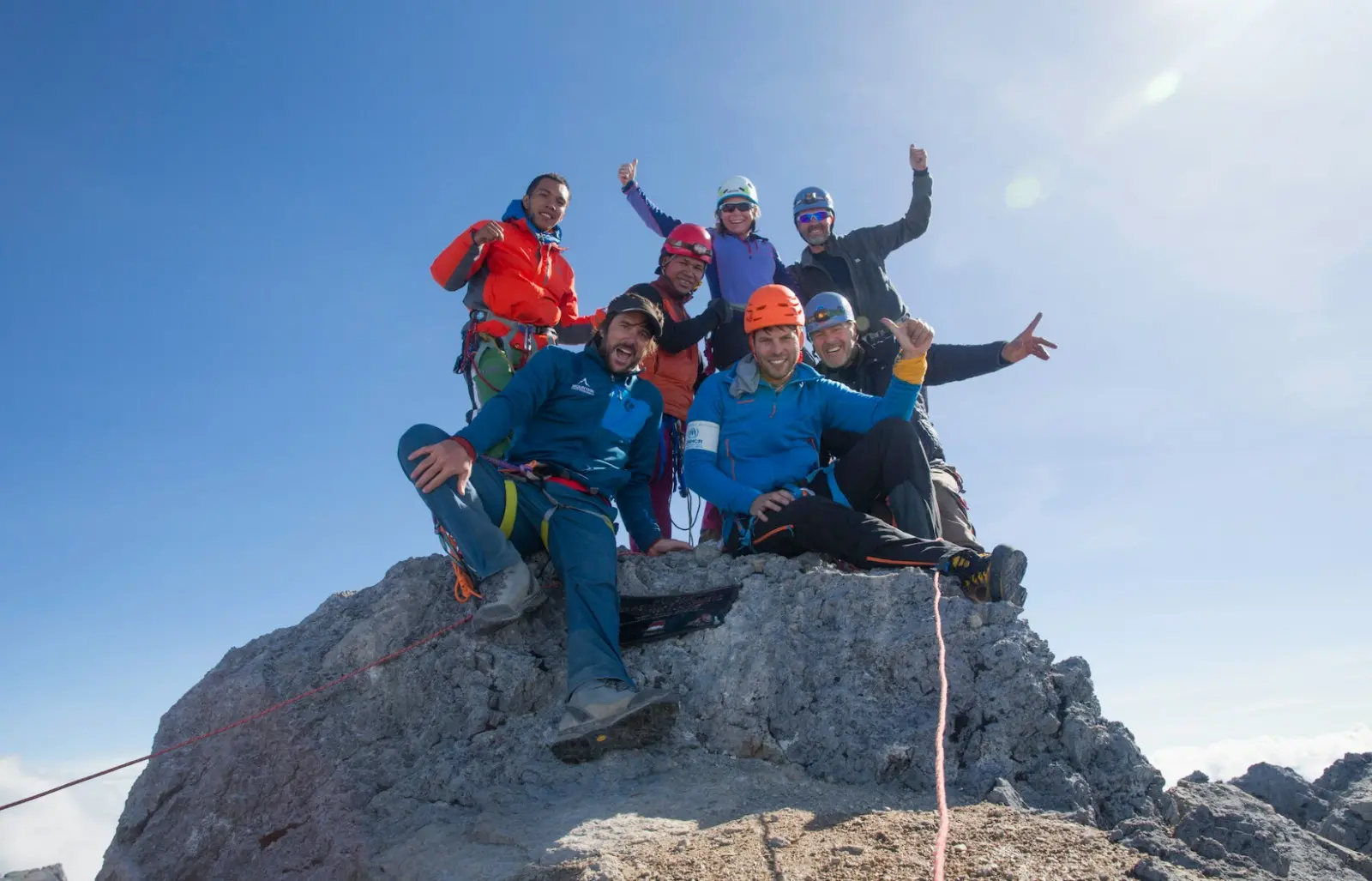
Monte Carstensz At 4,884 meters, Carstensz Pyramid is the highest mountain in Oceania. Rising from the remote rainforest of Papua New Guinea, it is considered the most exotic of the Seven Summits. This rugged limestone peak is the only one of the Seven Summits that requires climbing, offering a unique experience for mountaineers and adventurers alike.
Our journey to the summit of Oceania’s highest mountain begins in Bali. After arriving in Indonesia, we spend the first day packing our gear and recovering from the long journey. From Bali, we fly to Timika City on the island of West Papua. Once there, we repack our backpacks and ensure we are ready for the expedition.
Weather permitting, we will fly by helicopter to the Carstensz Base Camp the following morning. Upon arrival in the Yellow Valley, we will set up camp and get settled in. This will also be the first of two acclimatization days in preparation for our summit attempt.
Trip Overview:
Timika – Yellow Valley – Carstensz Summit – Yellow Valley – Timika
Why travel there?
We now offer helicopter flights to the Carstensz Pyramid Base Camp! The Carstensz Pyramid (sometimes called Puncak Jaya) is a mountain in the Sudirman Range, in the western part of the central highlands of Papua Province, Indonesia. Standing at 4,884 meters above sea level, the Carstensz Pyramid is the highest mountain in Indonesia, the highest mountain on the island of New Guinea, and the highest peak in Oceania (Australia).
Climbing the Carstensz Pyramid is arguably the most technically challenging of the Seven Summits. However, for experienced mountaineers with basic climbing skills, the expedition is quite manageable. The standard route leads almost vertically up the North Face and continues along the summit ridge, which consists entirely of solid rock.
The sharp limestone blocks provide a pleasant ascent to nearly 4,900 m in height, near the equator. The most difficult sections are secured with fixed ropes, and the largest gap on the summit ridge is crossed via the famous zipline traverse. Despite the nearby large gold mine, the area remains difficult to access for climbers and the public. A helicopter flight to the base camp is required, or alternatively (if safe), a 100 km trek that typically takes four to five days each way. The island also offers the unique opportunity to step back into the Stone Age, as the traditional lifestyle of most inhabitants has changed very little over the last few millennia.
4.884 m
5-7 hours
Hotel + Lodge + Tent
Spring
2 - 15 PEOPLE
Overnight
Hotel
Flight
Arrival in Australia
Driving
Approx. 1 hour
Hiking
Approx. 1 hour
Meals
– / – / –
Overnight
Hotel
Driving
Approx. 3 hours
Hiking
Approx. 3 hours
Flight
Approx. 1 hour. Helicopter sightseeing flight.
Meals
B/-/-
Overnight
Camping
Driving
Approx. 4 hours
Hiking
Approx. 5 hours
Meals
B/L/D
Overnight
Camping
Hiking
Approx. 5 hours
Meals
B/L/D
Overnight
Hotel
Driving
Approx. 4 hours
Hiking
Approx. 5 hours
Flight
Air travel / Return flight.
Meals
B/-/-
Overnight
Hotel
Driving
Approx. 3 hours
Hiking
Approx. 5 hours
Meals
B/-/-
Overnight
Hotel
Driving
Approx. 1 hour
Hiking
Approx. 1 hour
Flight
Journey home by plane.
Meals
B/-/-
International flights to Indonesia and domestic flights to Timika.
Processing and fees for the visa required to enter Indonesia.
Lunch and dinner during the stay in Timika.
Mandatory health insurance with coverage for mountain activities.
Technical clothing, harness, helmet, and personal climbing gear.
Expenses incurred by leaving the expedition early for any reason.
Additional costs resulting from flight delays or cancellations.
Tips, phone calls, and any services not specified in the program.